Best Fashion Training School in Asero Abeokuta, Ogun State – Belart Institute of Fashion and Technology
Are you searching for the best fashion training school in Asero, Abeokuta, Ogun State, where you can learn professional fashion design, pattern cutting, garment construction, corsetry and fashion entrepreneurship?
Whether you are a young school leaver exploring career opportunities, an unemployed graduate looking for a marketable skill, or an existing fashion designer hoping to improve your craftsmanship, choosing the right training institution is an important investment.
Fashion design has evolved beyond simply learning how to operate a sewing machine. Today’s competitive fashion industry demands creativity, precision, an understanding of garment construction, customer satisfaction and sound business management.
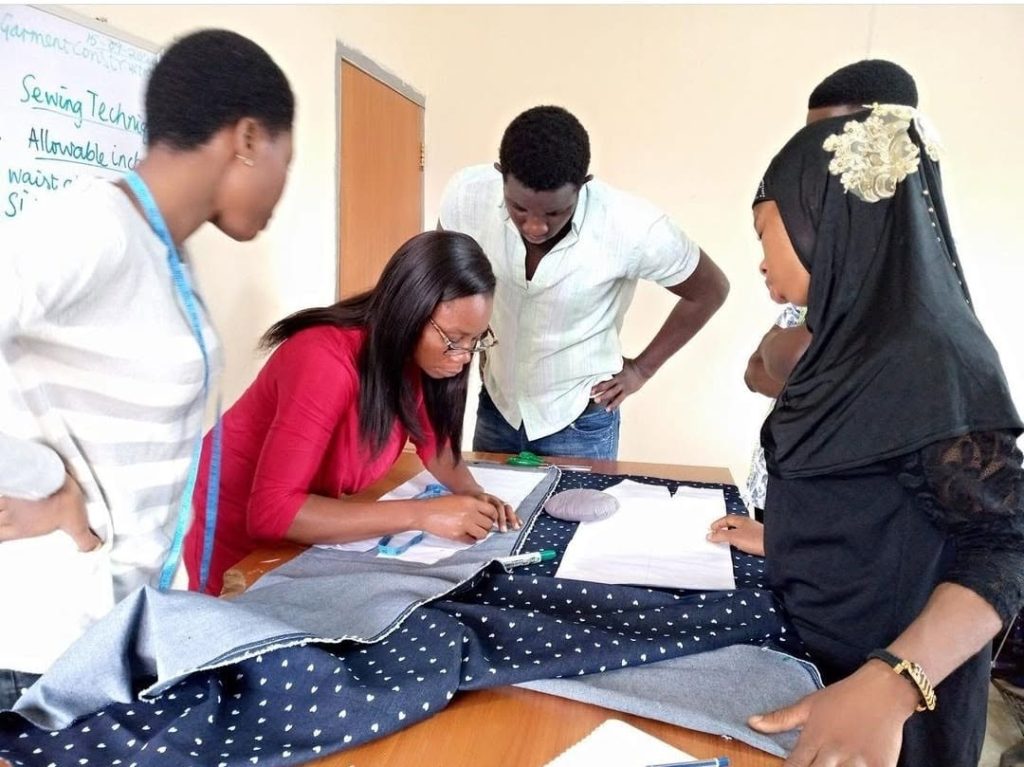 Belart Institute of Fashion and Technology fashion upgrade programme in Asero Abeokuta 2
One institution worth considering is Belart Institute of Fashion and Technology, located at No. 4 Adedoyin Street, Asero Estate, Abeokuta, Ogun State.
The institute promotes structured fashion education covering pattern cutting, professional sewing, haute couture, corsetry, fashion illustration and fashion business.
This guide examines what makes quality fashion education valuable, what prospective students can learn at Belart Institute, the advertised training fee, potential career opportunities and how to apply.
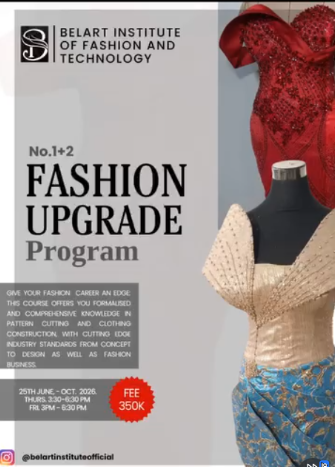 Belart Institute of Fashion and Technology fashion upgrade programme in Asero Abeokuta featuring professional corsetry and couture garment designs.
Where Is the Best Fashion Training School in Asero Abeokuta?
Belart Institute of Fashion and Technology is a fashion training institution located at No. 4 Adedoyin Street, Asero Estate, Abeokuta, Ogun State, Nigeria.
The institute offers fashion-related training, including its advertised Fashion Upgrade Programme for individuals seeking to strengthen their technical and creative skills.
Belart Institute – Contact and Application Details
| Information |
Details |
| School Name |
Belart Institute of Fashion and Technology |
| Location |
4 Adedoyin Street, Asero Estate, Abeokuta, Ogun State |
| Training Focus |
Fashion Design, Garment Construction and Fashion Business |
| Advertised Upgrade Programme Fee |
₦350,000 |
| Telephone |
0810 550 4592 |
| Email |
belartinstitute@gmail.com |
| Instagram |
@belartinstituteofficial |
| Application |
Online Registration Form |
Apply Here: https://forms.gle/jiwserd5TijLwHci6
Enquiries: Call +234 810 550 4592.
The ₦350,000 fee relates to the advertised Fashion Upgrade Programme. Prospective students should confirm the current programme fee, eligibility, next intake date and additional costs before paying.
Why Fashion Design Is a Valuable Career Skill in Nigeria
Fashion is an important part of Nigeria’s creative economy. From traditional attire and bespoke tailoring to bridal couture, ready-to-wear collections and clothing accessories, the industry serves different customer groups.
According to UNESCO’s 2023 report, The Fashion Sector in Africa: Trends, Challenges and Opportunities for Growth, Africa’s textile, clothing and footwear exports were estimated at approximately US$15.5 billion annually in the data reviewed.
The report also indicates that approximately 90% of enterprises in Africa’s fashion sector are small and medium-sized businesses.
Source: UNESCO – The Fashion Sector in Africa.
These figures demonstrate the commercial relevance of African fashion, although they are continent-wide estimates rather than figures for Ogun State specifically.
For Nigerians, fashion entrepreneurship provides possible entry points into self-employment, professional tailoring, clothing production, design services and related creative businesses.
However, success is not automatic. Many fashion entrepreneurs struggle with inconsistent finishing, poor pricing, inaccurate measurements, delayed deliveries and insufficient business knowledge.
This is why professional training should teach both garment-making techniques and the commercial skills needed to operate sustainably.
Why Consider Belart Institute of Fashion and Technology in Abeokuta?
Prospective students should evaluate a fashion school based on its teaching content, practical training opportunities, instructors, learning environment and relevance to their career goals.
Belart Institute’s published Fashion Upgrade Programme covers several areas that are particularly relevant to professional garment production.
1. Emphasis on Professional Craftsmanship
Successful fashion designers need more than creativity. They must understand how fabric behaves, how garments should fit different body shapes and how to achieve consistent finishing.
Belart’s advertised training includes professional craftsmanship with attention to detail.
For example, a well-constructed wedding dress requires accurate measurements, properly aligned seams, appropriate structural support and careful finishing.
These details distinguish professional garment construction from basic sewing.
2. Training in Advanced Garment Construction
Belart’s programme emphasizes structured garments designed for proper fit, function and movement.
This is particularly important for designers interested in formal dresses, bridal wear, jackets and couture garments.
Students looking to develop stronger construction techniques may find this specialized focus useful.
3. Fashion Design and Business Knowledge
Learning how to make attractive clothes is one part of establishing a fashion career.
Designers must also learn how to interpret customer requirements, manage production costs, establish realistic prices and deliver quality garments consistently.
Belart’s advertised programme incorporates fashion business alongside technical training, making it relevant to people interested in developing commercially viable fashion brands.
4. Accessible Location in Abeokuta
Belart Institute is located in Asero Estate, Abeokuta.
This provides a local training option for residents of Asero and other parts of Abeokuta who prefer to learn within Ogun State rather than relocate to Lagos.
Students travelling from locations such as Adigbe, Panseke, Leme, Kemta, Kuto and nearby communities can assess the journey to the institute when planning their training.
What Courses Can You Learn at Belart Institute of Fashion and Technology?
The Fashion Upgrade Programme advertises a curriculum covering several important areas of fashion design.
Professional Pattern Cutting
Pattern cutting is a fundamental skill in garment production.
A pattern serves as the technical guide for transforming a clothing design into accurately shaped fabric pieces.
Students working toward professional competence need to understand measurement interpretation, pattern drafting, allowances, fitting adjustments and fabric cutting.
According to Nigeria’s National Board for Technical Education, pattern drafting, garment construction and quality control are important competencies within the National Skills Qualification curriculum for Fashion and Garment Making.
Source: NBTE – Fashion and Garment Making Occupational Standards.
Belart’s advertised focus on pattern cutting is therefore relevant to recognized occupational skills in fashion production. This does not, by itself, establish that Belart awards an NBTE-accredited qualification.
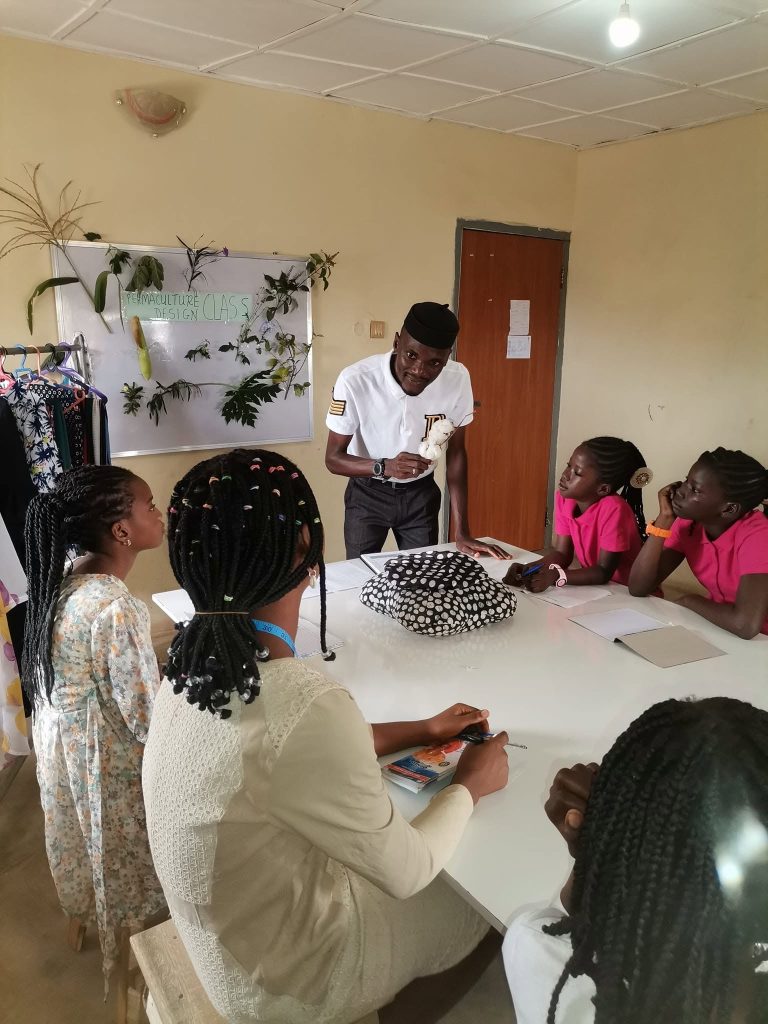 Belart Institute of Fashion and Technology fashion upgrade programme in Asero Abeokuta 2
Corsetry and Structured Garments
Corsetry is an important skill for designers interested in bridal fashion, evening wear, owambe outfits and structured gowns.
Producing a professional corset requires an understanding of body measurements, shaping, support, garment balance and finishing.
A designer who develops this skill can explore more technically demanding garment categories.
Haute Couture and Owambe Designing
Nigeria’s celebration culture creates demand for distinctive outfits for weddings, birthdays, anniversaries, traditional ceremonies and other social events.
Belart’s programme includes haute couture and owambe designing, which focuses on more sophisticated clothing construction and design interpretation.
For aspiring designers, this area offers an opportunity to understand complex garment structures and finishing techniques suitable for special-occasion wear.
Jacket Making and Professional Sewing
Jacket construction involves several technical considerations, including shaping, interfacing, lining, collars, sleeves and fitting.
Professional sewing also requires the ability to select appropriate techniques for different fabrics and garment designs.
Training in these areas can help students improve accuracy and workmanship.
Fashion Illustration and Design Principles
Before a garment is produced, a designer often needs to communicate an idea visually.
Belart’s programme includes fashion drawing, advanced style interpretation and the principles and elements of design.
These topics help learners understand proportion, colour, balance, shape, texture and the relationship between creative concepts and wearable garments.
Fashion History and Contemporary Industry Standards
Understanding fashion history provides insight into how clothing styles, techniques and consumer preferences have evolved.
Belart also introduces learners to contemporary fashion industry standards and future developments.
For students planning to establish a long-term career, understanding both traditional craftsmanship and changing market preferences is valuable.
Is Belart Institute Suitable for Beginners or Experienced Fashion Designers?
The advertised Fashion Upgrade Programme is particularly relevant to individuals seeking to improve their existing fashion-design knowledge or develop more advanced garment construction skills.
However, people with little or no sewing experience should not assume that every advanced programme is suitable for complete beginners.
If you have never used a sewing machine, your learning needs may include basic measurements, machine operation, simple stitching and introductory garment construction.
An experienced tailor, on the other hand, may need advanced pattern techniques, corsetry, professional finishing and business development.
Before registering, contact Belart Institute to confirm the appropriate programme for your current skill level, including whether a beginner or foundation training route is available.
How Much Is the Fashion Training Fee at Belart Institute?
Belart Institute advertised its Fashion Upgrade Programme at ₦350,000 for the June–October 2026 cohort.
The published schedule for that cohort included Thursday sessions from 3:30 p.m. to 6:30 p.m. and Friday sessions from 3:00 p.m. to 6:30 p.m.
As this advertised programme runs through October 2026, prospective applicants should confirm the next available intake and current timetable rather than assume these dates apply to a new cohort.
It is also advisable to confirm whether tuition covers fabrics, sewing materials, machine access, practical assignments and any certificate-related charges.
Is ₦350,000 Worth Investing in Fashion Training?
The value of a fashion course should be measured against the practical skills acquired, the quality of instruction and the student’s ability to apply those skills commercially.
Consider an illustrative example.
Suppose a trained designer produces a premium bespoke outfit sold for ₦130,000.
If fabric, trimmings, allocated direct labour, electricity and other direct production expenses total ₦90,000, the remaining contribution is ₦40,000 per order.
At that level, nine completed orders would generate ₦360,000 in contribution before other business expenses.
This example illustrates how stronger technical capability and commercial pricing could contribute toward recovering training costs.
It is not a forecast of student earnings or a guarantee that enrolment will result in profitable orders.
Actual outcomes depend on customer demand, garment quality, marketing, competition, pricing discipline and operating costs.
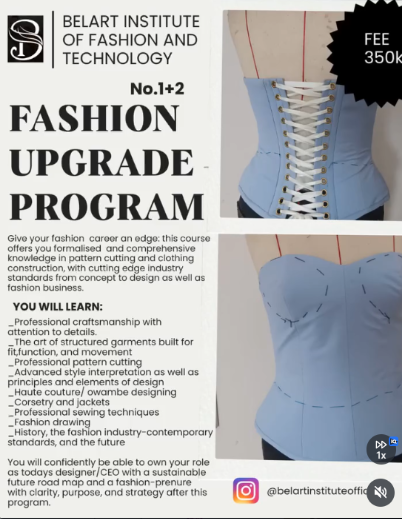 Belart Institute of Fashion and Technology fashion upgrade programme in Asero Abeokuta featuring professional corsetry and couture garment designs.
Career Opportunities After Professional Fashion Training
Fashion skills can create several possible career and business pathways.
A graduate or trainee may choose to work as a bespoke fashion designer, garment production assistant, pattern cutter, bridal wear specialist, costume designer or fashion entrepreneur.
Others may explore ready-to-wear production, fashion illustration, clothing alterations or production management.
For unemployed graduates, technical training can provide an additional vocational pathway alongside conventional employment.
The Nigerian National Skills Qualifications Framework recognizes that relevant occupational competencies can be acquired through different learning routes, including formal training and practical experience.
Nevertheless, students should confirm the type of certificate awarded by their chosen school and whether it is formally accredited before relying on it for employment or further education.
Why Abeokuta Is an Interesting Location for Fashion Training
Abeokuta has a significant cultural connection with Nigerian textile production, particularly Adire.
Adire is a traditional Yoruba resist-dye textile associated strongly with the Egba people of Ogun State.
The National Commission for Museums and Monuments has documented Adire as an important aspect of Nigerian dress culture.
In November 2020, the Ogun State Government launched an initiative to expand the market for Adire through digital commerce, highlighting the wider commercial potential of indigenous textiles.
For aspiring designers, Abeokuta offers a culturally relevant environment in which to explore how traditional fabrics can be incorporated into contemporary clothing.
For example, a fashion entrepreneur might combine Adire textiles with modern jacket construction, structured dresses or ready-to-wear designs.
These opportunities demonstrate how technical garment-making expertise and local creative heritage can work together.
What Should You Consider Before Choosing a Fashion Training School?
Before committing to a fashion course, assess the quality of practical instruction, the experience of the instructors, equipment availability and the curriculum.
Where possible, visit the school and examine actual garments produced by students or instructors.
Pay attention to seam quality, fitting, fabric handling, finishing and the technical complexity of completed projects.
You should also enquire about class sizes, practical assignments, feedback from instructors and opportunities to develop a portfolio.
For business-minded students, the inclusion of pricing, customer management, production planning and fashion entrepreneurship is especially relevant.
Avoid choosing a school solely because its advertisements promise rapid success.
Fashion design requires sustained practice, attention to detail and continuous improvement.
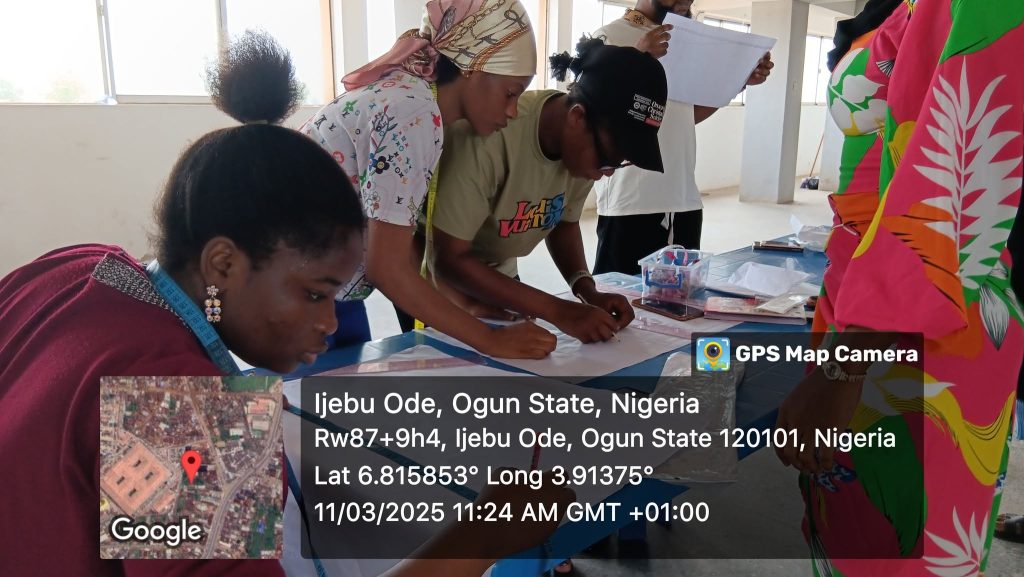 Belart Institute of Fashion and Technology fashion upgrade programme in Asero Abeokuta 2
How to Start a Fashion Business After Training
Professional training should ideally prepare aspiring entrepreneurs to make informed commercial decisions.
Begin by identifying a suitable market segment. A designer may focus on corporate wear, bridal fashion, owambe outfits, traditional attire or ready-to-wear products.
Rather than attempting to serve every customer immediately, concentrate on developing a few garment categories in which you can deliver consistent quality.
Build a portfolio showing completed garments, technical details and different designs.
Use clear customer agreements covering measurements, materials, prices, delivery dates and alteration policies.
Keep accurate records of fabric purchases, production expenses and customer payments.
When you are ready to formalize your business, consult Nigeria’s Corporate Affairs Commission for business-name registration requirements.
The objective should be to develop a dependable fashion enterprise, not merely to own sewing equipment.
How to Apply to Belart Institute of Fashion and Technology
If you are interested in studying at Belart Institute in Asero, Abeokuta, the application process begins with an enquiry.
Step 1: Contact the Institute
Call 0810 550 4592 or email belartinstitute@gmail.com to discuss available training programmes.
Step 2: Confirm Your Preferred Programme
Explain whether you are a beginner, intermediate learner or experienced designer seeking advanced skills.
Step 3: Request Current Admission Information
Ask about the next intake, applicable fees, class schedule, materials, programme duration and certification arrangements.
Step 4: Complete the Application Form
Use the school’s supplied application link:
https://forms.gle/jiwserd5TijLwHci6
Step 5: Confirm Enrolment and Payment
Follow the institute’s verified registration instructions and retain your payment confirmation.
You can also follow Belart Institute on Instagram at:
https://www.instagram.com/belartinstituteofficial/
Frequently Asked Questions About Fashion Training in Asero Abeokuta
Which fashion school can I consider in Asero, Abeokuta?
Belart Institute of Fashion and Technology is one option to consider. It is located at No. 4 Adedoyin Street, Asero Estate, Abeokuta, and advertises structured training in garment construction, pattern cutting, corsetry and related fashion skills.
Does Belart Institute teach corsetry?
Yes. Corsetry is among the subjects listed in its advertised Fashion Upgrade Programme.
Can an unemployed graduate apply to Belart Institute?
Unemployed graduates interested in fashion design can enquire about available training routes. The appropriate programme will depend on their existing skills and the institute’s current admission requirements.
How much does fashion training cost at Belart Institute?
The advertised Fashion Upgrade Programme fee for the June–October 2026 cohort was ₦350,000. Applicants should contact the institute to confirm the fee for a future cohort or another programme.
Does Belart Institute offer professional fashion design training?
The institute advertises professional garment construction, pattern cutting, sewing techniques, fashion illustration, couture-related skills and fashion business training.
Where is Belart Institute of Fashion and Technology located?
Belart Institute is located at 4 Adedoyin Street, Asero Estate, Abeokuta, Ogun State, Nigeria.
How can I register for Belart Institute?
Prospective students can call 0810 550 4592, email belartinstitute@gmail.com or use the online application form at https://forms.gle/jiwserd5TijLwHci6.
 Belart Institute of Fashion and Technology fashion upgrade programme in Asero Abeokuta 2
Conclusion: Build Your Fashion Career with Belart Institute of Fashion and Technology in Abeokuta
Building a successful career in fashion requires creativity, practical knowledge, discipline and the ability to translate ideas into professionally finished garments.
For young people, unemployed graduates and existing designers seeking to develop their skills, choosing a fashion school with clearly defined training content is an important decision.
Belart Institute of Fashion and Technology stands out as a local option worth exploring for professional pattern cutting, garment construction, corsetry, couture techniques and fashion business education in Asero, Abeokuta.
Its advertised Fashion Upgrade Programme provides a useful starting point for prospective students evaluating advanced fashion training.
Whether your ambition is to become a professional designer, improve your existing tailoring skills or establish a commercially viable fashion brand, begin by identifying the programme that matches your current ability and career objectives.
Start Your Fashion Training Enquiry Today
Belart Institute of Fashion and Technology
Address: No. 4 Adedoyin Street, Asero Estate, Abeokuta, Ogun State, Nigeria.
Phone: +234 810 550 4592
Email: belartinstitute@gmail.com
Instagram: @belartinstituteofficial
Apply Online: Complete the Belart Institute Application Form
Contact Belart Institute today to enquire about the next training intake and take a practical step toward developing your fashion career.
References and Further Reading
- UNESCO (2023). The Fashion Sector in Africa: Trends, Challenges and Opportunities for Growth.
- National Board for Technical Education – Fashion and Garment Making National Skills Qualification Standards.
- Federal Ministry of Education – Nigerian Skills Qualifications Framework.
- National Commission for Museums and Monuments – Nigerian Dress Culture.
- Corporate Affairs Commission – Business Name Registration.
- Belart Institute – Public Business Directory Listing.
Related