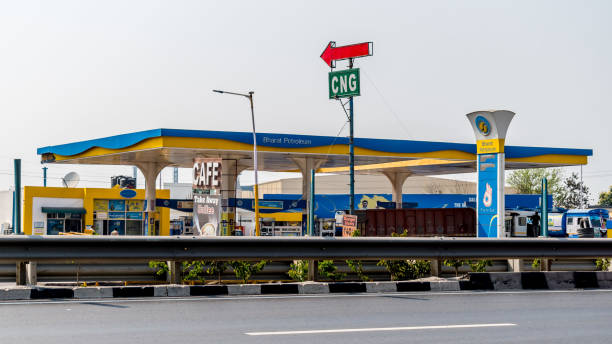
 CNG Daughter Station
Executive Summary
PATILAD CNG & Energy Solutions Limited is a proposed Nigerian clean-energy infrastructure company established to develop and operate a modern Compressed Natural Gas daughter station serving commercial transport operators, fleet owners, logistics companies, corporate organisations and private CNG vehicle users.
The proposed business responds to an emerging infrastructure gap created by the increasing adoption of CNG-powered and CNG-converted vehicles across Nigeria.
Unlike conventional petrol stations, a CNG daughter station can receive compressed gas transported from an appropriate supply point and make it available for vehicle refuelling at strategically selected locations. This can help extend CNG availability into viable markets where direct pipeline access is unavailable or commercially impractical.
PATILAD CNG & Energy Solutions Limited will position itself within this growing downstream gas mobility ecosystem by providing safe, reliable and accessible CNG refuelling services.
The proposed station will target a high-traffic Nigerian urban or transport corridor selected following a detailed feasibility and location study. Particular attention will be given to proximity to commercial transport clusters, logistics operators, bus fleets and major road corridors.
The project’s commercial strategy will focus on developing predictable demand rather than relying entirely on individual motorists. PATILAD will therefore pursue supply arrangements and partnerships with commercial bus operators, ride-hailing fleets, logistics businesses, institutional fleets and other high-mileage vehicle operators.
The project’s final investment requirement will be determined after engineering design, site selection, equipment quotations, regulatory requirements and gas supply structure have been established. The capital budget is expected to cover site development, storage and dispensing infrastructure, civil works, safety systems, electrical infrastructure, monitoring technology, professional services and initial working capital.
PATILAD’s long-term objective is to develop a scalable network of commercially viable CNG refuelling infrastructure across strategic transport corridors in Nigeria.
Business Description
Company Overview
Company Name: PATILAD CNG & Energy Solutions Limited
Business: CNG Refuelling Infrastructure and Clean Mobility Services
Industry: Energy / Natural Gas / Transportation Infrastructure
Country: Nigeria
Business Model: CNG Daughter Station and Fleet Refuelling Services
PATILAD CNG & Energy Solutions Limited is conceived as a specialised energy infrastructure business providing CNG refuelling services to Nigeria’s emerging natural-gas vehicle market.
The business will operate within the broader transition from conventional transportation fuels towards alternative energy sources, particularly domestically available natural gas.
The company’s first station will serve as a proof of commercial viability before expansion into additional locations based on demand, infrastructure availability and financial performance.
Vision
To become a trusted provider of clean transportation energy infrastructure in Nigeria.
Mission
To make CNG more accessible to Nigerian motorists and commercial fleets through safe, reliable and strategically located refuelling infrastructure.
The Business Opportunity
Nigeria has substantial natural gas resources, yet transportation has historically depended heavily on petrol and diesel.
The Federal Government’s current clean-mobility programme is attempting to change this by expanding CNG conversion and refuelling infrastructure.
As of mid-2026, the official Pi-CNG & EV platform reports more than 120,000 converted vehicles and 400+ certified conversion centres, while the refuelling network remains at around 75 stations.
That difference is commercially significant.
Every additional vehicle converted to CNG creates recurring demand for fuel, but adoption depends partly on motorists being confident that CNG will be available when and where they need it.
The Federal Government recognises this infrastructure challenge. In March 2026, President Bola Tinubu directed the initiative to continue accelerating the deployment of CNG infrastructure, specifically including mother and daughter stations, integrated refuelling units and mobile refuelling units.
This creates an opportunity for private investors capable of developing compliant infrastructure in commercially attractive locations.
Services Offered
PATILAD CNG & Energy Solutions Limited will primarily generate revenue through the retail supply of CNG to eligible vehicles at its daughter station.
However, the commercial model will be structured around more than individual drive-in customers.
CNG Refuelling
The company’s core service will be the dispensing of CNG to compatible vehicles through approved station infrastructure.
The customer base will include private motorists, commercial buses, taxis, ride-hailing vehicles, logistics fleets and other compatible vehicles.
Fleet Refuelling Arrangements
PATILAD intends to develop relationships with companies operating multiple vehicles.
Rather than depending exclusively on irregular retail traffic, fleet agreements can create recurring demand.
For example, a logistics company operating 50 CNG vehicles could establish an account with PATILAD under agreed commercial terms and operational arrangements.
Corporate and Institutional Accounts
PATILAD will pursue institutional customers transitioning their transportation fleets to CNG.
Such customers could include employee transportation operators, logistics companies, schools, large corporations and transport businesses.
Future Expansion
Subject to approvals and commercial viability, the company may later explore complementary services and additional station locations.
Expansion will only occur after the first facility demonstrates sustainable demand, positive cash flow and acceptable return on invested capital.
Industry & Market Analysis
Nigeria’s Emerging CNG Market
Nigeria’s CNG transportation market has undergone significant expansion since the launch of the Presidential CNG Initiative in 2023.
The initiative has subsequently evolved into the Presidential Initiative on Compressed Natural Gas and Electric Vehicles (Pi-CNG & EV), reflecting the government’s wider clean-mobility strategy.
Official 2026 programme data indicates more than 120,000 vehicles have been converted, over 400 conversion centres have been developed, and more than 75 refuelling stations are operational.
The official station directory currently shows the network covering about 20 states across all six geopolitical zones, although infrastructure remains unevenly distributed.
This uneven distribution is important for investors.
The commercial opportunity is not simply “Nigeria needs more CNG stations.”
A station becomes viable when the investor identifies a location where:
CNG vehicle density + fleet demand + traffic + limited competing capacity + reliable gas supply = sufficient throughput to justify the investment.
CNG Economics and Customer Adoption
One of the strongest drivers of CNG adoption is operating cost.
Pi-CNG & EV states that CNG can reduce fuel costs per kilometre by approximately 40–60% compared with petrol, although actual savings depend on the vehicle, route, fuel prices and operating conditions.
This is particularly relevant for high-mileage commercial operators.
A private motorist driving occasionally may take longer to realise the economic benefit of conversion. A commercial driver covering substantial kilometres daily experiences fuel expenditure continuously.
Consequently, PATILAD’s initial market strategy will prioritise high-utilisation vehicles.
Infrastructure Gap
Nigeria’s conversion infrastructure has expanded rapidly, but refuelling infrastructure remains comparatively limited.
The official Pi-CNG & EV network lists about 75 refuelling stations across 20 states.
This creates a potential bottleneck.
If vehicle conversions continue increasing faster than convenient refuelling capacity, commercially attractive gaps may emerge along major transport corridors and in high-density cities.
Government policy is already responding to this challenge.
In May 2026, four CNG infrastructure projects were commissioned across Lagos, Abuja and Owerri with support from the Midstream and Downstream Gas Infrastructure Fund. One project at FUTO, Owerri includes a 1,000 standard-cubic-metres-per-hour Integrated Refuelling Unit, CNG storage, dispensing infrastructure, on-site CNG-powered generation and a vehicle conversion facility.
This illustrates the increasing scale and sophistication of CNG infrastructure development in Nigeria.
Target Market
PATILAD’s market will be divided into three major segments.
The first is commercial transportation, including buses, taxis and other high-mileage operators. This segment is attractive because fuel is a major operating expense and vehicles refuel frequently.
The second is corporate and logistics fleets. These customers can provide predictable demand and may be secured through structured commercial arrangements.
The third is the growing population of private CNG motorists, which is expected to become increasingly important as conversion penetration and refuelling infrastructure expand.
Location selection will therefore be based on actual CNG vehicle traffic and potential contracted demand rather than population alone.
Competitive Analysis
The emerging Nigerian CNG market already includes established energy companies and newer infrastructure operators.
For PATILAD, this means the competitive advantage cannot simply be “we sell CNG.”
The business must compete through location, reliability, safety, customer experience and fleet relationships.
Benchmark Competitor: NIPCO Gas Limited
A useful benchmark is NIPCO Gas Limited, which has a visible presence in Nigeria’s CNG refuelling market.
The official Pi-CNG station directory currently lists multiple NIPCO Gas locations, particularly across Edo State, alongside facilities in Abuja and other markets. For example, the directory lists NIPCO stations along Benin-Sapele Road, Textile Mill Road, Agbor Road, Lagos Road and the Benin-Auchi corridor.
NIPCO’s existing network creates several competitive advantages: established energy-sector experience, operational infrastructure, brand recognition and an existing footprint.
PATILAD’s Proposed Competitive Position
PATILAD will differentiate itself through strategic site selection, reliable station availability, strong fleet relationships, digital transaction records and customer-focused service.
One particularly important strategy will be anchor customers.
Before final investment approval, PATILAD would seek letters of intent or preliminary supply commitments from fleet operators.
Marketing & Sales Strategy
PATILAD’s most important marketing activity will be demand aggregation.
Instead of spending heavily on broad advertising, the company will identify organisations and transport groups that consume significant quantities of transportation fuel and build relationships with them.
Fleet Acquisition Strategy
PATILAD’s business development team will approach commercial transport operators, logistics companies, ride-hailing fleet managers and institutional transport providers within the station’s catchment area.
The proposition will focus on fuel availability, operational reliability, transparent transaction records and the potential economics of CNG for high-mileage vehicles.
Where commercially appropriate, fleet customers may receive account-based services and negotiated arrangements linked to volume.
Partnerships
The company will seek partnerships across the wider CNG ecosystem.
For example, relationships with accredited conversion centres can create mutual referrals: vehicle owners who convert need reliable refuelling locations, while the availability of refuelling infrastructure can make conversion more attractive.
Nigeria already has hundreds of conversion centres, making these relationships increasingly relevant.
Location-Based Marketing
For a refuelling business, location itself is a marketing asset.
The proposed facility would therefore be positioned where it can conveniently serve its intended customer base and support safe vehicle movement.
Visibility, accessibility and proximity to high-frequency users will be evaluated during the feasibility study.
Digital Presence
PATILAD will maintain digital channels that communicate station availability, operating hours, customer support information and relevant services.
As the company expands, digital fleet accounts and transaction reporting can become additional value propositions for corporate customers.
What Would Come Next in the Full Business Plan?
A complete CNG Daughter Station Business Plan should proceed into some of the most important sections of the investment document, including the Operations Plan, Technical and Infrastructure Plan, Regulatory and Compliance Strategy, Management and Organisation, Risk Analysis, Implementation Schedule, Capital Requirement, Revenue Model, Financial Assumptions, Five-Year Profit & Loss Projection, Cash Flow Forecast, Balance Sheet, Break-Even Analysis, Debt Service Analysis, Sensitivity Analysis, ROI and Investor/Funding Proposal.
What Can a CNG Daughter Station Business Plan Be Used For?
A professionally developed CNG Daughter Station Business Plan can support applications and discussions relating to:
Bank Loans and Development Finance: Demonstrating project viability, repayment capacity, cash flow and capital requirements.
Investor and Equity Funding: Showing the market opportunity, competitive position, financial returns and expansion potential.
Strategic Partnerships: Supporting negotiations with gas suppliers, fleet operators, infrastructure partners and other stakeholders.
Grant and Innovation Programmes: Where the specific programme permits energy infrastructure or clean-mobility projects.
Business Proposals and Concept Notes: Presenting the investment opportunity to potential partners and institutions.
Internal Investment Decisions: Helping the promoters determine whether the project is financially attractive before committing substantial capital.
A business plan does not guarantee funding or regulatory approval. It helps present the project professionally and demonstrates that the investment has been researched and financially assessed.
Need a Customised CNG Daughter Station Business Plan?
This sample provides only part of what a bankable CNG infrastructure business plan should contain.
If you are planning to establish a CNG daughter station, do not make a multimillion-naira investment based on generic assumptions.
Your plan should be built around your proposed location, available land, target customers, expected throughput, gas supply arrangement, equipment specifications, supplier quotations, capital structure and financing terms.
At Dayo Adetiloye Business Hub, we help entrepreneurs and investors develop customised, professional and funding-ready business documentation.
We can support your CNG project with a comprehensive business plan, feasibility study, market research, five-year financial projections, capital requirement analysis, break-even analysis, sensitivity analysis, investor pitch deck, bank loan documentation and investment-readiness advisory.
Contact Dayo Adetiloye Business Hub
Call or WhatsApp:
08105636015
08076359735
08113205312
Email: dayohub@gmail.com
Website: www.dayoadetiloye.com
If your goal is to approach a bank, investor, development finance institution or strategic partner, we can develop the full CNG Daughter Station Business Plan in Nigeria around your actual project and provide the financial model required to determine whether the investment makes commercial sense.
The opportunity is growing, but in infra
Related