
For many Nigerians living in the United Kingdom, starting a business back home is more than a dream, it’s a long-term wealth creation strategy.
Whether you’re looking to build an agribusiness, launch a technology startup, establish a manufacturing company, or open a healthcare business, one question always comes up:
“How do I fund my startup in Nigeria while living in the UK?”
The good news is that funding a business in Nigeria from the UK has never been easier. With digital banking, improved financial infrastructure, government intervention programmes, and growing investor interest, diaspora Nigerians have multiple ways to finance businesses back home.
The challenge, however, is not simply raising money; it’s raising money wisely.
Many promising businesses fail because founders underestimate startup costs, invest in the wrong assets, or neglect proper planning before committing capital.
As someone who has spent over a decade helping entrepreneurs prepare business plans, financial models, grant applications, loan proposals, and investment documents, I can confidently say:
The businesses that attract funding are rarely the ones with the best ideas, they are the ones that are properly prepared.
This guide explains the smartest ways Nigerians in the UK can fund startups in Nigeria and how to position your business for long-term success.
Why More Nigerians in the UK Are Investing Back Home
Nigeria remains one of Africa’s largest investment destinations because of its:
- Population of over 230 million people
- Large youth population
- Growing digital economy
- Expanding middle class
- Huge agricultural potential
- Rising demand for locally produced goods and services
For Nigerians earning in Pounds Sterling (£), investing in Nigeria can provide significant advantages because startup costs, labour, and operational expenses are generally lower than in the UK.
Many diaspora investors are now creating businesses that generate income in Nigeria while allowing them to continue living and working in the UK.
Step 1: Start With Your Own Capital
The first source of funding should always be your own savings where possible.
Many successful businesses begin with:
- Personal savings
- Monthly salary
- Annual bonuses
- Business profits
- Freelance income
Using your own capital demonstrates commitment and reduces early debt pressure.
However, don’t invest everything you own.
Maintain an emergency fund and avoid risking money you cannot afford to lose.
Step 2: Build a Bankable Business Plan
Before spending a single pound, develop a professional business plan.
A business plan helps you answer critical questions such as:
- How much capital is required?
- What equipment will you buy?
- Who are your customers?
- When will the business become profitable?
- What are the risks?
- How will cash flow be managed?
A professional business plan also becomes essential if you later apply for:
- Loans
- Grants
- Investor funding
- Accelerator programmes
- Venture capital
Step 3: Raise Capital From Family and Friends-Professionally
Many diaspora entrepreneurs receive support from family members or trusted friends.
If you choose this route:
- Document every investment
- Agree on ownership structure
- Clarify repayment expectations
- Define roles and responsibilities
Never rely solely on verbal agreements.
Written agreements protect relationships.
Step 4: Explore Bank of Industry (BOI) Loans
The Bank of Industry (BOI) remains one of Nigeria’s leading development finance institutions supporting MSMEs and manufacturing businesses.
Depending on the programme, eligible businesses may access financing at relatively competitive interest rates, often below commercial lending rates.
BOI typically requires:
- CAC registration
- Business plan
- Financial projections
- Proforma invoice
- Business bank account
- Evidence of operations (for existing businesses)
- Required collateral or guarantees, depending on the product
One important point:
BOI generally finances viable businesses, not just business ideas.
Preparation is essential before applying.
Step 5: Apply for Grants
Nigeria and international development partners continue to offer grants for businesses in sectors such as:
- Agriculture
- Technology
- Renewable energy
- Manufacturing
- Women-led businesses
- Youth entrepreneurship
- Climate innovation
- Healthcare
- Social enterprises
Examples include programmes by:
- SMEDAN
- Bank of Industry
- Tony Elumelu Foundation
- African Development Bank initiatives
- Innovation challenges
- International donor organisations
Remember:
Grants are competitive.
Strong documentation significantly improves your chances.
Step 6: Join Accelerator and Incubation Programmes
Accelerators often provide:
- Seed funding
- Mentorship
- Investor introductions
- Technical support
- Business development
- Pitch opportunities
Many successful Nigerian startups secured their first funding through accelerator programmes before raising larger investments.
Step 7: Attract Angel Investors
Angel investors typically invest in businesses with:
- Strong teams
- Large market opportunities
- Innovative solutions
- Evidence of traction
- Scalable business models
Before approaching investors, ensure you have:
- Pitch deck
- Financial model
- Business plan
- Customer validation
- Growth strategy
Step 8: Raise Venture Capital (VC)
Venture capital is suitable for startups with significant growth potential.
VC investors usually look for businesses capable of scaling rapidly across markets.
This option is more common for:
- Technology startups
- FinTech
- HealthTech
- AgriTech
- Logistics
- SaaS businesses
VC funding is not suitable for every business.
Step 9: Use Revenue to Fund Growth
One of the healthiest ways to grow a business is by reinvesting profits.
Instead of depending entirely on external funding:
- Improve sales
- Increase efficiency
- Reinvest profits
- Expand gradually
Businesses with healthy cash flow often attract investors more easily.
Step 10: Consider Diaspora Investment Partnerships
Many Nigerians in the UK partner with trusted professionals or other diaspora investors.
These partnerships can reduce individual financial risk while increasing available capital.
However, conduct proper due diligence before entering any partnership.
How Much Money Do You Really Need?
One of the biggest mistakes entrepreneurs make is underestimating startup costs.
Beyond equipment, remember to budget for:
- Registration
- Rent
- Salaries
- Marketing
- Transportation
- Working capital
- Insurance
- Utilities
- Contingency funds
A detailed financial projection helps determine realistic funding needs.
Common Funding Mistakes
Raising money without a business plan
Investors fund structured businesses, not vague ideas.
Applying for every grant
Focus on opportunities aligned with your business.
Poor financial projections
Unrealistic numbers damage credibility.
No proof of demand
Investors want evidence that customers actually need your product.
Weak documentation
Missing documents delay funding.
Why You Need an Experienced BDSP
This is where many entrepreneurs gain a competitive advantage.
A Business Development Service Provider (BDSP) helps transform ideas into investment-ready businesses.
At Dayo Adetiloye Business Hub, we have supported thousands of entrepreneurs across Nigeria and the diaspora with:
- Business Plans
- Financial Projections
- Feasibility Studies
- Grant Writing
- BOI Loan Applications
- Pitch Deck Development
- Market Research
- Investment Readiness
- Business Registration
- Growth Strategy
We understand what lenders, investors, grant reviewers, and development organisations look for.
Whether you’re in London, Birmingham, Manchester, Glasgow, Leeds, or anywhere else in the UK, we can help you establish and fund your business in Nigeria.
Become Funding-Ready Before Opportunities Open
Many entrepreneurs wait until a grant or investment opportunity is announced before preparing.
By then, it is often too late.
Successful applicants usually already have:
- Business Plan
- Financial Model
- Pitch Deck
- Company Profile
- Market Research
- Business Registration
- Funding Strategy
Preparation gives you a significant advantage.
Our Signature Product is Here
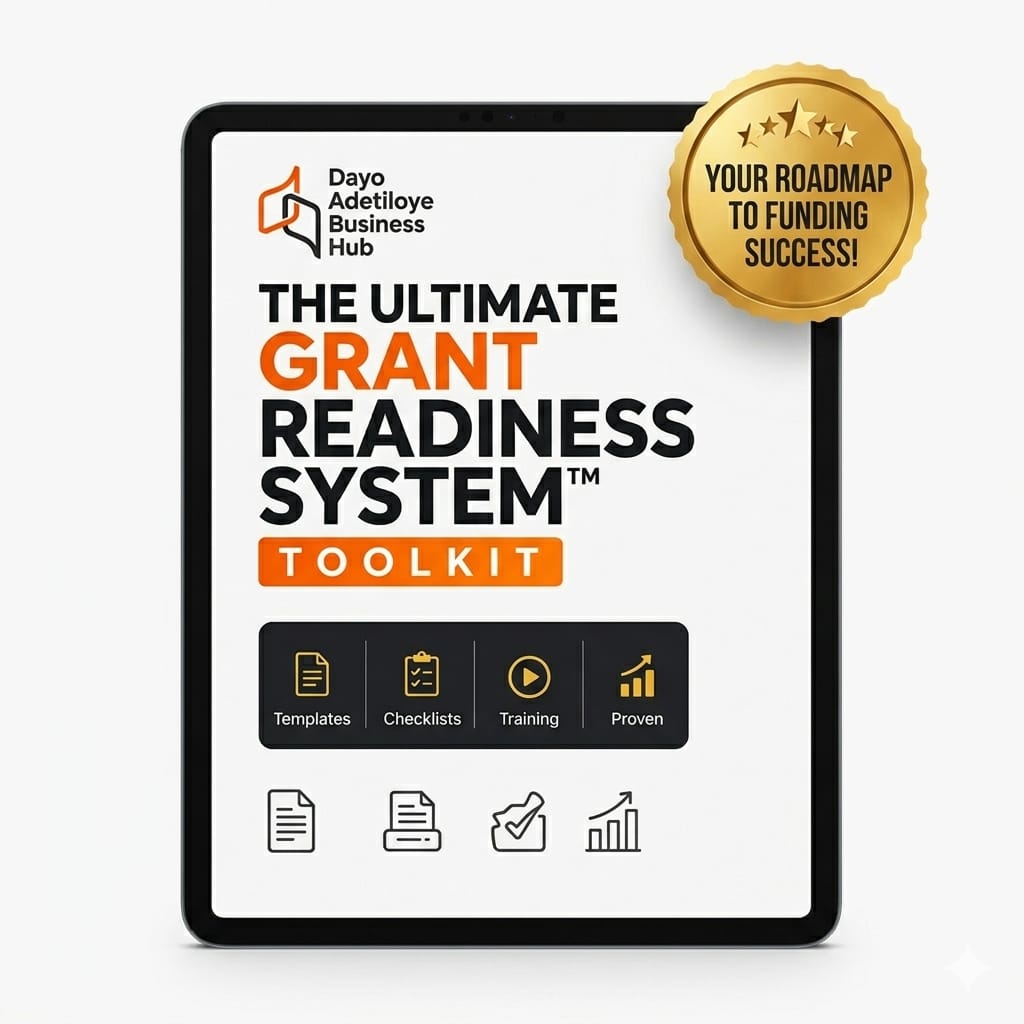
The Ultimate Grant Readiness System™
The Complete Toolkit for Grants, Funding & Investment Readiness
If you’re serious about raising money for your startup, this toolkit was created for you.
Inside you’ll find:
- Professional Business Plan Templates
- Financial Projection Models
- Investor Pitch Deck Templates
- Grant Proposal Templates
- Due Diligence Checklists
- Company Profile Templates
- Funding Readiness Guides
- Grant Opportunity Database
- Proposal Writing Resources
- Practical fundraising strategies
Whether you’re applying for BOI financing, grants, angel investment, venture capital, or accelerator programmes, this system helps you prepare like a professional.
Get The Ultimate Grant Readiness System™
https://selar.com/38k7agny27?affiliate=j2uk
Need Professional Help?
If you’re planning to fund a startup in Nigeria while living in the UK, don’t leave your investment to chance.
At Dayo Adetiloye Business Hub, we help entrepreneurs move from ideas to funded businesses through practical advisory and professional documentation.
Our Services Include:
✅ Business Plans
✅ Financial Projections
✅ Grant Writing
✅ BOI Loan Applications
✅ Feasibility Studies
✅ Investment Readiness
✅ Business Registration
✅ Pitch Deck Development
Contact Us Today
📞 Call or WhatsApp:
- 08105636015
- 08076359735
- 08113205312
📧 Email: dayohub@gmail.com
🌐 Website: www.dayoadetiloye.com
Related