
Whether you’re a Nigerian living in the United Kingdom, a member of the diaspora looking to invest back home, or a UK-based entrepreneur seeking opportunities in Africa’s largest economy, Nigeria remains one of the continent’s most attractive markets for business.
With a population exceeding 230 million people, a growing digital economy, an expanding middle class, and increasing government support for entrepreneurship, Nigeria continues to attract investors across sectors such as agriculture, technology, manufacturing, healthcare, education, logistics, renewable energy, and financial services.
However, starting a business remotely from the UK is not as simple as registering a company online. Many entrepreneurs lose money because they misunderstand regulatory requirements, fail to conduct proper due diligence, or attempt to manage operations from thousands of miles away without experienced local support.
As an accredited Business Development Service Provider (BDSP) who has helped hundreds of entrepreneurs establish and grow businesses in Nigeria, We’ve seen both the success stories and the costly mistakes.
This guide explains exactly how to start a business in Nigeria from the UK in 2026 and how to avoid the pitfalls.
Why Nigerians in the UK Are Investing in Nigeria
Several factors continue to attract UK-based investors:
- Large consumer market
- Growing technology ecosystem
- Expanding agricultural opportunities
- Manufacturing potential
- Increasing digital adoption
- Government intervention funds
- Opportunities in healthcare, education and renewable energy
For many Nigerians in the diaspora, starting a business back home is also a way of creating long-term wealth while contributing to national development.
Can You Start a Business in Nigeria Without Living There?
Yes.
You can legally own and operate a Nigerian business while residing in the UK.
Many successful businesses are managed remotely.
However, one important truth remains:
Your business should never operate without trusted people on the ground.
Remote ownership works best when combined with:
- proper business systems
- trustworthy local representatives
- professional advisers
- regular monitoring
Step 1: Decide What Business to Start
This sounds obvious, but it is where many people fail.
Don’t start a business simply because someone tells you it is profitable.
Instead, ask:
- Is there real market demand?
- Can the business be managed remotely?
- Who are my competitors?
- How long before profitability?
- What risks exist?
Popular sectors include:
- Agriculture
- Food processing
- Logistics
- Healthcare
- ICT
- Renewable energy
- Fashion
- Manufacturing
- Real estate support services
- Professional consulting
Always conduct proper market research before investing.
Step 2: Prepare a Business Plan
A business plan is more than a document for banks.
It becomes your roadmap.
A good business plan should answer:
- What problem are you solving?
- Who are your customers?
- How will you make money?
- What are your startup costs?
- What risks exist?
- What licences are required?
- What financial projections do you expect?
If you intend to apply later for:
- BOI loans
- grants
- investor funding
- SMEDAN programmes
- accelerator programmes
a professional business plan is almost always required.
Step 3: Register Your Business with CAC
Every legitimate business should be registered with the Corporate Affairs Commission (CAC), the agency responsible for company registration in Nigeria under the Companies and Allied Matters Act (CAMA).
Depending on your goals, you may register as:
- Business Name
- Private Limited Company (Ltd)
For most investors intending to scale, attract investors, or access finance, a Private Limited Company is generally the preferred structure.
Step 4: Obtain Tax Registration
After incorporation, your business should complete the necessary tax registrations, including obtaining a Tax Identification Number (TIN) through the relevant tax authorities. This is required for opening many corporate bank accounts and meeting tax obligations.
Depending on your business activities, you may also have obligations relating to VAT and corporate income tax.
Step 5: Open a Corporate Bank Account
Never run a serious business through a personal account.
A business account improves:
- credibility
- accountability
- financial management
- access to funding
Most banks will require:
- CAC documents
- TIN
- identification documents
- company resolutions (where applicable)
Step 6: Secure a Physical Business Address
Every registered Nigerian company requires a registered address.
Depending on your business model, this may be:
- office space
- warehouse
- factory
- virtual office (where appropriate)
- shared workspace
Avoid using random addresses simply to complete registration.
Step 7: Build Your Local Team
This is one of the biggest determinants of success.
Many diaspora businesses fail because owners rely solely on relatives without clear accountability structures.
Depending on your business, consider hiring:
- Operations Manager
- Accountant
- Sales Officer
- Administrative Assistant
- Customer Service Representative
Even if you begin small, define roles clearly.
Step 8: Put Proper Systems in Place
Successful businesses rely on systems not constant supervision.
Implement:
- accounting software
- inventory management
- approval processes
- reporting systems
- weekly KPIs
- digital document storage
Technology allows UK-based owners to monitor operations effectively.
Step 9: Understand Industry Regulations
Some sectors require additional licences.
Examples include:
- Food processing
- Pharmaceuticals
- Education
- Financial services
- Agriculture exports
- Healthcare
Before investing, determine:
- licences required
- regulatory agencies
- compliance obligations
Failure to do so can delay operations.
Step 10: Prepare for Funding
One mistake many entrepreneurs make is waiting until a grant or loan opportunity opens before preparing.
Funding institutions usually request:
- Business Plan
- Financial Projections
- Company Profile
- Pitch Deck
- CAC documents
- Bank statements
- Tax documents
- Business records
Businesses that prepare these documents early respond much faster to opportunities.
Common Mistakes Diaspora Entrepreneurs Make
After working with many UK-based clients, these are the most common mistakes I see.
Investing without market research
Just because a business appears profitable doesn’t mean it suits your goals.
Choosing the wrong partners
Many businesses fail because founders rely on trust alone instead of proper governance.
No financial controls
Always separate:
- personal expenses
- business expenses
Use proper accounting systems.
Poor documentation
Businesses without proper records struggle to obtain:
Trying to do everything yourself
Managing everything remotely usually leads to burnout.
Build a capable local team.
Why You Need a Business Development Service Provider (BDSP)
This is where many diaspora entrepreneurs save time, money, and costly mistakes.
A professional Business Development Service Provider (BDSP) does much more than register your company.
A good BDSP helps you:
- Validate your business idea
- Conduct market research
- Register your business correctly
- Develop bankable business plans
- Prepare financial projections
- Build funding-ready documentation
- Connect you with relevant opportunities
- Improve investment readiness
- Develop growth strategies
- Navigate regulatory requirements
Think of your BDSP as your trusted business adviser on the ground.
Why Choose Dayo Adetiloye Business Hub?
At Dayo Adetiloye Business Hub, we have spent over a decade helping entrepreneurs, startups, SMEs, NGOs, and diaspora investors successfully establish and grow businesses in Nigeria.
Our services include:
- Business Registration (CAC)
- Business Plan Development
- Feasibility Studies
- Financial Projections
- Grant Writing
- Investor Pitch Decks
- Market Research
- Business Advisory
- Investment Readiness
- Funding Support
- MSME Capacity Development
Whether you’re starting a business from London, Manchester, Birmingham, Glasgow, Leeds, or anywhere in the UK, we can serve as your trusted business development partner in Nigeria.
Our goal is not just to help you register a company but to help you build a profitable and sustainable business.
Prepare Your Business for Grants, Loans and Investors
One thing we’ve learned over the years is this:
Funding rarely goes to businesses that start preparing after opportunities are announced.
The businesses that succeed are already prepared.
That’s why we created:
The Ultimate Grant Readiness System™
The Complete Toolkit for Grants, Loans, Funding & Investment Readiness
Inside the system, you’ll get:
- Business Plan Templates
- Financial Projection Templates
- Pitch Deck Templates
- Grant Templates
- Proposal Templates
- Due Diligence Checklists
- Business Profile Templates
- Funding Readiness Frameworks
- Funding Opportunity Resources
this toolkit helps position your business for success.
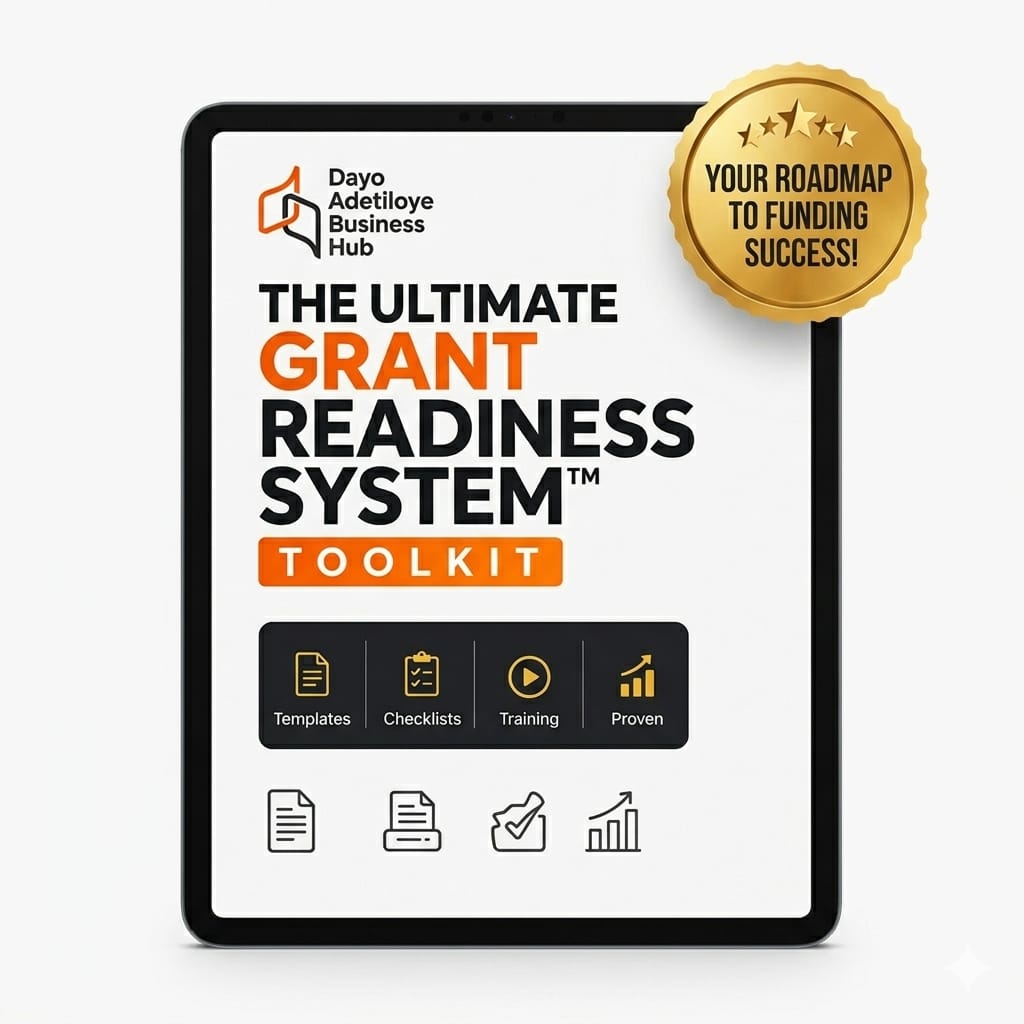
Get The Ultimate Grant Readiness System™
https://selar.com/38k7agny27?affiliate=j2uk
Need Professional Support?
Contact Dayo Adetiloye Business Hub
📞 Call or WhatsApp:
- 08105636015
- 08076359735
- 08113205312
📧 Email: dayohub@gmail.com
🌐 Website: https://www.dayoadetiloye.com
Related