Introduction
 How to Structure an Executive Summary That Captures Investor Attention in 30 Seconds
How to write an executive summary that captures investor attention is a question many entrepreneurs ask when preparing a business plan for funding. You may have a great business idea, a growing customer base, and a strong market opportunity, but if your executive summary does not communicate that value quickly and clearly, an investor may not read far enough to discover it.
An executive summary is more than an introduction to your business plan. It is a concise presentation of the most important information about your business and the opportunity you are presenting to an investor, lender, or potential business partner.
Consider a Nigerian food-processing business seeking ₦30 million to expand production. The business may have excellent products, loyal customers, and an opportunity to supply supermarkets across several states. However, an executive summary that simply says, “We need ₦30 million to expand our business,” does very little to make the opportunity compelling.
A stronger investor-ready executive summary would quickly communicate the problem the business solves, its solution, target customers, business model, existing traction, funding requirement, and what the funding will achieve.
That is the real purpose of an executive summary: to give the reader enough clarity and interest to continue reading.
In this article, we will show you how to structure an executive summary, what investors need to see, common mistakes to avoid, and how to turn a basic business plan executive summary into a stronger investment case.
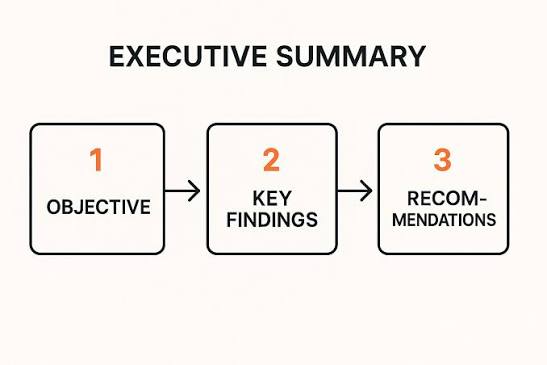
What Is an Executive Summary?
An executive summary is a short overview of the most important information contained in a business plan. It gives the reader a quick understanding of what the business does, the problem it solves, the market opportunity, how it makes money, its current progress, and what it needs to achieve its next stage of growth.
Although an executive summary appears at the beginning of a business plan, it is usually written after the rest of the business plan has been completed. This is because the summary should accurately reflect the key information presented throughout the document.
For an entrepreneur seeking funding, the business plan executive summary is particularly important because it provides the first impression of the business. An investor should be able to understand the business opportunity without having to read every page before getting the basic picture.
For example, imagine a Nigerian food-processing company producing packaged plantain chips. Instead of opening its business plan with a lengthy history of how the founder started making chips from her kitchen,
The executive summary could immediately communicate:
- The problem: Many consumers want convenient, locally produced snacks with consistent quality.
- The solution: A packaged plantain-chip brand supplying retail shops, supermarkets, schools, and distributors.
- The market: A growing demand for convenient packaged snacks.
- Traction: Existing customers, sales, distribution relationships, or production growth.
- Funding need: ₦30 million to increase production capacity, improve packaging, and expand distribution.
- Opportunity: Increased production and distribution could help the company reach more customers and generate higher revenue.
In other words, an executive summary for investors should not tell the entire story. It should tell the right part of the story clearly and concisely enough to make the reader want to learn more.
A good executive summary therefore answers one critical question:
“Why should I continue reading this business plan?”
If your summary can answer that question convincingly, you have already taken an important step toward creating an investor-ready business plan.
Why the First 30 Seconds Matter to Investors
Imagine an investor opening your business plan while reviewing several other funding opportunities. They are not looking for a long story before they understand the business. They want to quickly determine what the business does, whether the opportunity is attractive, and whether it is worth spending more time on.
That is why the first 30 seconds of your executive summary matter.
The goal is not to convince an investor to commit money within 30 seconds. Rather, your goal is to create enough clarity, relevance, and interest for the investor to continue reading.
For example, compare these two openings from a food-processing business seeking ₦30 million:
Weak opening:
“ABC Foods was established in 2023 by a passionate entrepreneur who has always had an interest in food production. The business started on a small scale and has gradually grown over the years.”
There is nothing necessarily wrong with the story, but it does not immediately tell the investor why the business represents an attractive opportunity.
Stronger opening:
“ABC Foods produces packaged plantain chips for supermarkets, schools, and retail distributors. With established customer demand and growing monthly sales, the company is seeking ₦30 million to expand production capacity, improve packaging, and strengthen distribution across three additional states.”
The second version immediately communicates what the business does, who it serves, its progress, how much funding it needs, and what the money will accomplish.
This is what an effective executive summary for investors should do. It should reduce the amount of work the reader needs to do to understand your opportunity.
Your first few sentences should therefore answer the most important questions:
- What does the business do?
- What problem does it solve?
- Who are the customers?
- What evidence shows that the opportunity is real?
- How much funding is needed and why?
When these points are clear from the beginning, the reader has a reason to keep going. When they are buried under a long company history, complicated explanations, or unnecessary details, you risk losing their attention before they reach the strongest parts of your business plan.
The 5 Things Your Executive Summary Must Communicate
A strong executive summary should give an investor a clear picture of your business without forcing them to search through several pages for basic information. While the exact structure may vary from one business to another, there are five essential things your executive summary should communicate.
-
The Business and the Problem
Start by making it clear what your business does and what problem it solves.
Do not simply write, “We are a food-processing company.” Explain the need your business is addressing and who experiences that problem.
For example:
“ABC Foods produces hygienically packaged plantain chips for supermarkets, schools, and retail outlets, addressing the demand for convenient, locally produced snacks with consistent quality.”
The investor immediately knows what the company does, who it serves, and the need behind the business.
-
Your Solution or Product
Next, explain what you offer and why your solution matters.
Keep this focused. An investor does not need a detailed product description in the executive summary. Explain what you sell, how it solves the identified problem, and what makes your approach valuable.
For ABC Foods, the solution could be its packaged plantain chips, available in different sizes and designed for retail distribution.
The key question is:
Why would customers choose your product or service?
-
The Market Opportunity
An investor needs to know that there are enough potential customers to support the business.
Briefly communicate your target market, customer segments, market demand, and growth opportunity. Where possible, support your claims with credible market research rather than simply saying, “The market is very large.”
For example, ABC Foods could identify its target customers as supermarkets, schools, offices, retail shops, and distributors, while explaining its plan to expand from its current market into additional states.
You do not need to put every market statistic into the executive summary. Give enough information to demonstrate that the opportunity is real and worth exploring further.
-
How the Business Makes Money
Your executive summary should also make the business model clear.
Investors want to understand how the business generates revenue. Explain briefly:
- What you sell
- Who pays for it
- How you sell it
- Your major revenue streams
- What supports profitability
For example, ABC Foods may generate revenue by selling directly to consumers, supplying supermarkets and retailers, and selling in bulk to distributors.
A business can have an excellent product and a large market, but if the path to revenue is unclear, the investment opportunity becomes difficult to assess.
-
The Funding Request and Potential
Finally, if you are seeking funding, state exactly what you are asking for and what the funding will achieve.
Avoid vague statements such as:
“We need funding to grow the business.”
Instead, be specific:
“ABC Foods is seeking ₦30 million to purchase additional production equipment, improve packaging, increase raw-material capacity, and expand distribution into three additional states.”
Where appropriate, briefly communicate the potential outcome—such as increased production capacity, projected revenue growth, new distribution channels, or job creation.
The investor should finish your executive summary understanding how much you need, why you need it, and why the business has the potential to become more valuable with the funding.
The Simple Formula
When putting these five elements together, think of your executive summary as a simple story:
Business & Problem → Solution → Market → Revenue Model → Funding & Potential
You do not need to reveal every detail at this stage. Your job is to present the strongest parts of the opportunity clearly enough to make the investor want to examine the rest of your business plan.
How to Structure Your Executive Summary
Knowing what to include in an executive summary is one thing; knowing how to structure an executive summary so that it flows logically is another.
A simple structure is to move the reader from the business problem to the opportunity and finally to the funding request.
You can use this sequence:
Business → Problem → Solution → Market → Traction → Business Model → Funding Request → Potential
- Introduce the Business
- State the Problem
- Present Your Solution
- Show the Market Opportunity
- Highlight Traction
- Explain How You Make Money
- State the Funding Request
- End With the Potential
How DABH Can Help You Create an Investor-Ready Business Plan
Creating an executive summary that captures attention is easier when the entire business plan is built around a clear and convincing business case.
At Dayo Adetiloye Business Hub (DABH), we help entrepreneurs turn their business ideas, records, and growth plans into professional, funding-ready documents.
Our services include:
- Business Plan Development – structured business plans designed for investors, lenders, and funding opportunities.
- Financial Projections – realistic revenue, cost, profit, and cash-flow projections.
- Feasibility Studies – assessing whether a proposed business or expansion is commercially viable.
- Pitch Deck Development – presenting your business opportunity clearly to potential investors and partners.
- Funding Application Support – helping you prepare the documents and information required for funding opportunities.
Whether you are starting a business, expanding an existing one, or preparing to approach investors, DABH can help you present your opportunity professionally and confidently.
Get Grant-Ready Before the Next Opportunity

Many organisations miss funding opportunities because they are not prepared when calls for applications open.
That’s why we created:
The Ultimate Grant Readiness System™
The Complete Toolkit for Grants, Funding & Investment Readiness
The toolkit includes:
- Grant Proposal Templates
- Business Plan Templates
- Financial Projection Models
- Investor Pitch Deck Templates
- Due Diligence Checklists
- NGO Proposal Templates
- Funding Readiness Resources
- Proposal Writing Guides
Whether you’re applying for international grants, innovation competitions, accelerator programmes, or investor funding, this toolkit will help you prepare professional applications with confidence.
Get instant access here:
http://selar.com/38k7agny27?affiliate=kjj9
Related