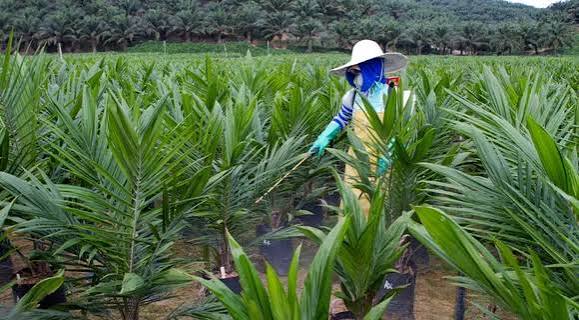
Is Oil Palm Plantation Profitable? Complete Cost and Profit Analysis for Nigeria
Oil palm plantation can be highly profitable in Nigeria, but it is not a quick-money agricultural venture. It is a long-term investment that requires suitable land, genuine improved seedlings, adequate maintenance, dependable labour, secure market access and enough working capital to sustain the plantation before meaningful harvest begins.
The most important question is therefore not simply:
“How much can I make from one hectare of oil palm?”
A serious investor should also ask:
- How much will establishment and maintenance cost?
- How many years will it take to recover the investment?
- What yield can reasonably be expected?
- Will the fruits be sold to a mill or processed independently?
- What happens if the selling price or yield falls?
- Does the land have a valid title and suitable rainfall?
- Can the plantation be professionally managed for 25–30 years?
This guide provides a practical 2026 cost and profit analysis for establishing an oil palm plantation in Nigeria. The projections are based on a one-hectare model, with an additional illustration for a 10-hectare commercial plantation.
All figures are planning estimates rather than guaranteed market prices. Actual costs will depend on location, land condition, labour rates, input prices, plantation management and market access.
Why Oil Palm Remains an Important Investment in Nigeria
Oil palm is used across several industries. Its products include:
- Crude palm oil
- Palm kernel oil
- Palm kernel cake
- Soap and detergent inputs
- Cosmetics
- Margarine and shortening
- Industrial fats
- Bio-based products
- Livestock feed ingredients
Nigeria has an estimated 3.2 million hectares under oil-palm harvesting, yet average productivity remains far below the yields achieved by well-managed commercial estates.
The opportunity is therefore not based only on expanding cultivated land. A major part of the opportunity lies in replacing ageing and low-yielding palms with improved planting materials and managing plantations more professionally.
The Nigerian Institute for Oil Palm Research, NIFOR, reports that well-managed estates in Nigeria can achieve approximately 15–25 tonnes of fresh fruit bunches per hectare annually.
This is significantly better than the low output commonly recorded on poorly maintained plantations using unimproved or ageing palms.
Oil palm is also attractive because it is a perennial crop. Once properly established, a plantation can produce for decades, although productivity, harvesting costs and replanting requirements change as the palms age.
How Many Oil Palm Trees Can Be Planted on One Hectare?
The commonly recommended planting density is approximately 143 palms per hectare, usually using a triangular spacing system of about nine metres.
FAO guidance confirms that appropriate spacing can accommodate approximately 143 palms per hectare while giving the palms enough access to light, air and soil nutrients.
Planting too closely may increase competition among the palms, while planting too widely reduces the productive use of the land.
For budgeting purposes, an investor should purchase slightly more than 143 seedlings to allow for:
- Transportation damage
- Early mortality
- Replanting
- Weak or abnormal seedlings
A practical budget may therefore provide for 150 seedlings per hectare.
When Does Oil Palm Start Producing?
Improved oil palm materials may begin producing approximately three years after field planting. NIFOR indicates that its Tenera planting materials mature from around the third year.
However, early production should not be confused with full commercial maturity.
NIFOR’s indicative yield pattern begins at approximately three tonnes of fresh fruit bunches per hectare and rises progressively as the palms mature. It reports that yields can reach approximately 18 tonnes per hectare around year 12 and up to 25 tonnes under favourable long-term conditions.
A conservative financial model should therefore increase yield gradually rather than assuming mature production immediately.
Key Assumptions Used in This Analysis
The following assumptions are used for the financial illustration:
| Assumption |
Base estimate |
| Plantation size |
1 hectare |
| Planting density |
143 palms |
| Seedlings budgeted |
150 |
| Seedling price |
₦2,500 each |
| First meaningful harvest |
Year 3 |
| Mature commercial yield |
18 tonnes of FFB per hectare |
| Planning price for FFB |
₦150,000 per tonne |
| Mature annual direct operating cost |
₦850,000 per hectare |
| Land purchase cost |
Excluded from base calculation |
| Processing mill |
Not included |
| Tax and financing costs |
Not included |
NIFOR currently lists improved oil palm seedlings at approximately ₦2,500 each, although investors should confirm availability and pricing directly before making commitments.
The ₦150,000 fresh fruit bunch selling price used here is a financial-planning assumption, not a fixed national market price. FFB prices differ by location, season, oil content, distance from the mill and buyer arrangements.
Estimated Cost of Establishing One Hectare
Initial establishment cost
| Item |
Estimated cost |
| Land survey, mapping and soil assessment |
₦100,000 |
| Land clearing and preparation |
₦300,000 |
| Pegging, lining and planting labour |
₦180,000 |
| 150 improved seedlings |
₦375,000 |
| Seedling transportation and replacement allowance |
₦100,000 |
| Cover crops and early weed control |
₦80,000 |
| Fertilizer and soil amendments |
₦150,000 |
| Basic tools and protective materials |
₦85,000 |
| Drainage or basic water provision |
₦100,000 |
| Security and basic boundary protection |
₦100,000 |
| Supervision and contingency |
₦150,000 |
| Estimated establishment cost |
₦1,720,000 |
This estimate excludes the cost of buying the land.
Land prices vary so widely across Edo, Ondo, Cross River, Akwa Ibom, Abia, Delta, Ogun and other producing areas that inserting one national land price would be misleading.
An investor who already owns suitable land may therefore establish one hectare for approximately ₦1.5 million–₦2 million, depending on site conditions.
Where heavy clearing, extensive drainage, fencing or road construction is required, the cost can be considerably higher.
Maintenance Costs Before Full Production
Oil palm requires continuous maintenance even when it is not yet generating substantial revenue.
Typical expenses include:
- Ring weeding
- Slashing
- Fertilizer application
- Pest and disease monitoring
- Fire prevention
- Pruning
- Replacement of dead palms
- Security
- Farm supervision
- Road and drainage maintenance
A reasonable maintenance schedule may look like this:
| Year |
Estimated operating cost |
| Year 1 |
₦450,000 |
| Year 2 |
₦500,000 |
| Year 3 |
₦600,000 |
| Year 4 |
₦700,000 |
| Year 5 |
₦780,000 |
| Year 6 |
₦820,000 |
| Mature years |
₦850,000 annually |
The investor must therefore have enough capital to fund establishment and at least two to three years of maintenance.
This is one of the biggest reasons poorly funded plantations fail. Some investors spend all their capital on land clearing and seedlings, only to neglect weed control, fertilizer and supervision afterwards.
Seven-Year Cost and Revenue Projection Per Hectare
The following projection assumes that yields rise gradually as the plantation matures.
| Year |
FFB yield |
Revenue |
Operating cost |
Net cash flow |
| Establishment |
– |
– |
₦1,720,000 |
(₦1,720,000) |
| Year 1 |
0 tonnes |
₦0 |
₦450,000 |
(₦450,000) |
| Year 2 |
0 tonnes |
₦0 |
₦500,000 |
(₦500,000) |
| Year 3 |
3 tonnes |
₦450,000 |
₦600,000 |
(₦150,000) |
| Year 4 |
8 tonnes |
₦1,200,000 |
₦700,000 |
₦500,000 |
| Year 5 |
12 tonnes |
₦1,800,000 |
₦780,000 |
₦1,020,000 |
| Year 6 |
15 tonnes |
₦2,250,000 |
₦820,000 |
₦1,430,000 |
| Year 7 |
18 tonnes |
₦2,700,000 |
₦850,000 |
₦1,850,000 |
Under these assumptions, the accumulated investment is recovered around Year 6 or early Year 7.
This calculation excludes:
- Land acquisition
- Loan interest
- Corporate overhead
- Income tax
- Depreciation
- Major road construction
- Processing equipment
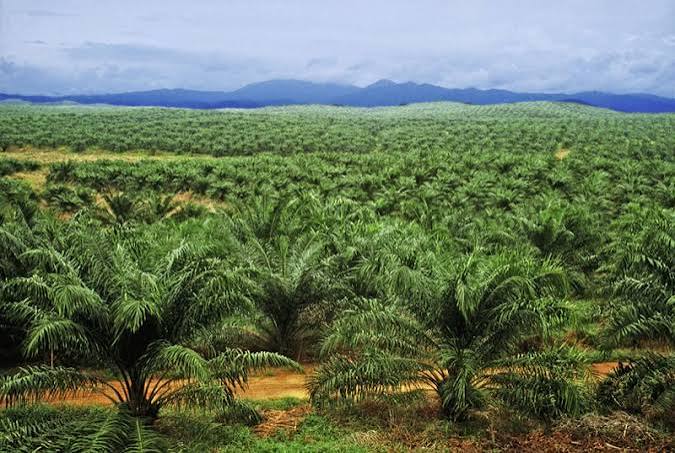
Mature Annual Profit Per Hectare
At a mature yield of 18 tonnes:
Annual revenue
18 tonnes × ₦150,000 = ₦2,700,000
Estimated annual operating cost
= ₦850,000
Estimated annual operating surplus
₦2,700,000 − ₦850,000 = ₦1,850,000 per hectare
This represents an operating margin of approximately 69% before land cost, tax, financing and central management overhead.
That margin is attractive, but it depends on achieving the assumed yield and selling price.
What Happens If Yield or Price Falls?
A responsible investor should not base the decision on only one favourable scenario.
Profit sensitivity per hectare
| Scenario |
Yield |
FFB price |
Revenue |
Operating cost |
Estimated profit |
| Weak case |
10 tonnes |
₦100,000 |
₦1,000,000 |
₦750,000 |
₦250,000 |
| Conservative case |
12 tonnes |
₦120,000 |
₦1,440,000 |
₦780,000 |
₦660,000 |
| Base case |
18 tonnes |
₦150,000 |
₦2,700,000 |
₦850,000 |
₦1,850,000 |
| Strong case |
22 tonnes |
₦180,000 |
₦3,960,000 |
₦1,000,000 |
₦2,960,000 |
This table shows why yield management is extremely important.
A plantation producing ten tonnes per hectare may remain profitable, but the return is substantially lower than that of a properly managed plantation producing 18–22 tonnes.
The investor cannot control the market price, but can improve several yield-related factors:
- Seedling quality
- Soil suitability
- Fertilizer programme
- Weed control
- Drainage
- Harvesting frequency
- Fire prevention
- Professional supervision
Ten-Hectare Commercial Plantation Illustration
A 10-hectare plantation would require approximately 1,430 productive palms, with perhaps 1,500 seedlings purchased to allow for replacement.
Estimated establishment capital
10 hectares × ₦1.72 million = ₦17.2 million
A commercial project should also budget for central infrastructure and management, including:
- Farm roads
- Store or small office
- Security post
- Water facilities
- Motorised equipment
- Supervisor accommodation
- Motorbike or basic farm vehicle
- Additional tools and contingency
This could bring the initial investment to approximately ₦22 million–₦28 million, excluding land.
Mature annual result
At 18 tonnes per hectare:
- Total FFB: 180 tonnes
- Revenue at ₦150,000 per tonne: ₦27 million
- Direct field operating costs: approximately ₦8.5 million
- Central supervision, administration and security: approximately ₦3 million
- Estimated operating profit: ₦15.5 million annually
This is before tax, financing expenses and major capital replacements.
A poorly managed 10-hectare farm may perform worse than a professionally managed three-hectare farm. Scale increases opportunity, but it also increases fraud, labour, logistics and supervision risks.
Should You Sell FFB or Process Palm Oil?
A plantation owner has two major options:
Sell fresh fruit bunches
Advantages include:
- Lower capital requirement
- Simpler operations
- Less processing risk
- Faster sales where reliable mills are nearby
The major disadvantage is that the processor captures part of the value from palm oil, kernel and by-products.
Establish or use a processing mill
Processing can generate additional value from:
- Crude palm oil
- Palm kernels
- Fibre
- Shell
- Sludge and other by-products
However, owning a mill introduces new costs:
- Machinery
- Fuel or electricity
- Water
- Skilled operators
- Maintenance
- Quality control
- Waste management
- Working capital
Processing is not automatically more profitable. An underutilised mill can become a financial burden.
New plantation investors may begin by supplying a reliable nearby processor, then consider processing when fruit volumes are large enough to justify the investment.
Major Risks in Oil Palm Investment
Fake or poor-quality seedlings
Cheap seedlings can lock the investor into decades of weak productivity. Planting materials should be obtained from NIFOR or another verifiable, authorised source.
Unsuitable land
Oil palm needs appropriate rainfall, soil, drainage and temperature. Cheap land in the wrong location can become an expensive mistake.
Land disputes
The investor should confirm ownership, conduct searches, survey the land and obtain properly executed documentation before development.
Fire
Dry-season fires can destroy years of investment. Fire belts, vegetation management and community engagement are essential.
Poor road access
FFB deteriorates after harvesting and should reach the processor quickly. A plantation located far from a reliable mill or accessible road may receive lower prices and incur higher transport costs.
Inadequate working capital
The plantation must be maintained for several years before significant cash flow begins.
Theft and weak supervision
Harvest theft, inflated input purchases, ghost workers and inaccurate production reports can reduce returns, especially for absentee investors.
Environmental and community risks
Responsible development should avoid illegal deforestation, disputed community land and damage to important ecosystems. FAO and World Bank-linked programmes increasingly emphasise sustainable agricultural value chains and responsible land use.
How to Improve Profitability
An investor can improve the economics of the plantation by:
- Using genuine improved Tenera seedlings.
- Selecting land within an appropriate ecological zone.
- Locating close to a reliable processing mill.
- Negotiating a written off-take arrangement.
- Maintaining accurate input, harvest and sales records.
- Hiring an experienced plantation supervisor.
- Applying fertilizer based on soil and leaf analysis.
- Intercropping carefully during the immature years where agronomically suitable.
- Sharing roads, machinery or logistics with nearby growers.
- Expanding into processing only after securing sufficient fruit volume.
NIFOR also provides technical training on oil palm nursery and plantation establishment, including dedicated courses for farmers, supervisors and entrepreneurs.
Is Oil Palm Plantation Profitable?
Yes, oil palm plantation can be profitable in Nigeria.
Based on the assumptions in this model:
- Establishment cost is approximately ₦1.72 million per hectare, excluding land.
- Total cash committed before strong production may exceed ₦2.7 million per hectare.
- Meaningful harvesting begins around Year 3.
- Mature revenue may reach approximately ₦2.7 million per hectare annually.
- Mature operating profit may reach approximately ₦1.85 million per hectare annually.
- Capital recovery may occur around Year 6 or Year 7.
However, profitability depends on professional execution. It should not be marketed as a passive investment that automatically produces millions every year.
The difference between a profitable plantation and an abandoned farm is usually found in:
- Planning
- Planting material
- Land suitability
- Farm management
- Working capital
- Market access
- Financial controls
Read Also: How to Become a Millionaire doing Rice Farming in Nigeria
Before You Invest, Prepare a Feasibility Study
A serious oil palm investment should begin with a location-specific feasibility study covering:
- Land suitability
- Soil assessment
- Rainfall and drainage
- Seedling sources
- Labour availability
- Road access
- Distance to processors
- FFB market prices
- Production assumptions
- Cash-flow requirements
- Risk management
- Return on investment
Generic online projections cannot replace a project-specific financial model.
At Dayo Adetiloye Business Hub, we support agribusiness investors with:
- Oil palm plantation business plans
- Feasibility studies
- Financial projections
- Market research
- Farm investment analysis
- Grant and loan applications
- Bank of Industry documentation
- Investor pitch decks
- Agribusiness advisory
Contact Dayo Adetiloye Business Hub
Call or WhatsApp:
08105636015
08076359735
08113205312
Email: dayohub@gmail.com
Website: www.dayoadetiloye.com
A professionally prepared feasibility study can help you determine whether the proposed land, scale and business model can generate acceptable returns before you commit substantial capital.
Final Verdict
Oil palm plantation is best suited to investors who:
- Can wait several years for strong cash flow
- Have access to suitable and secure land
- Can finance ongoing maintenance
- Are willing to use improved planting materials
- Can establish reliable professional management
- Have access to nearby buyers or processors
It is not ideal for investors seeking immediate monthly income or those without enough capital to maintain the plantation during its immature years.
When properly planned and managed, oil palm can become a valuable long-term agricultural asset. When established casually, without technical and financial discipline, it can tie down capital for years without producing the expected return.
Related