30-Day Journal for Emotional Wholeness: Make Space for Reflection and Self-Awareness
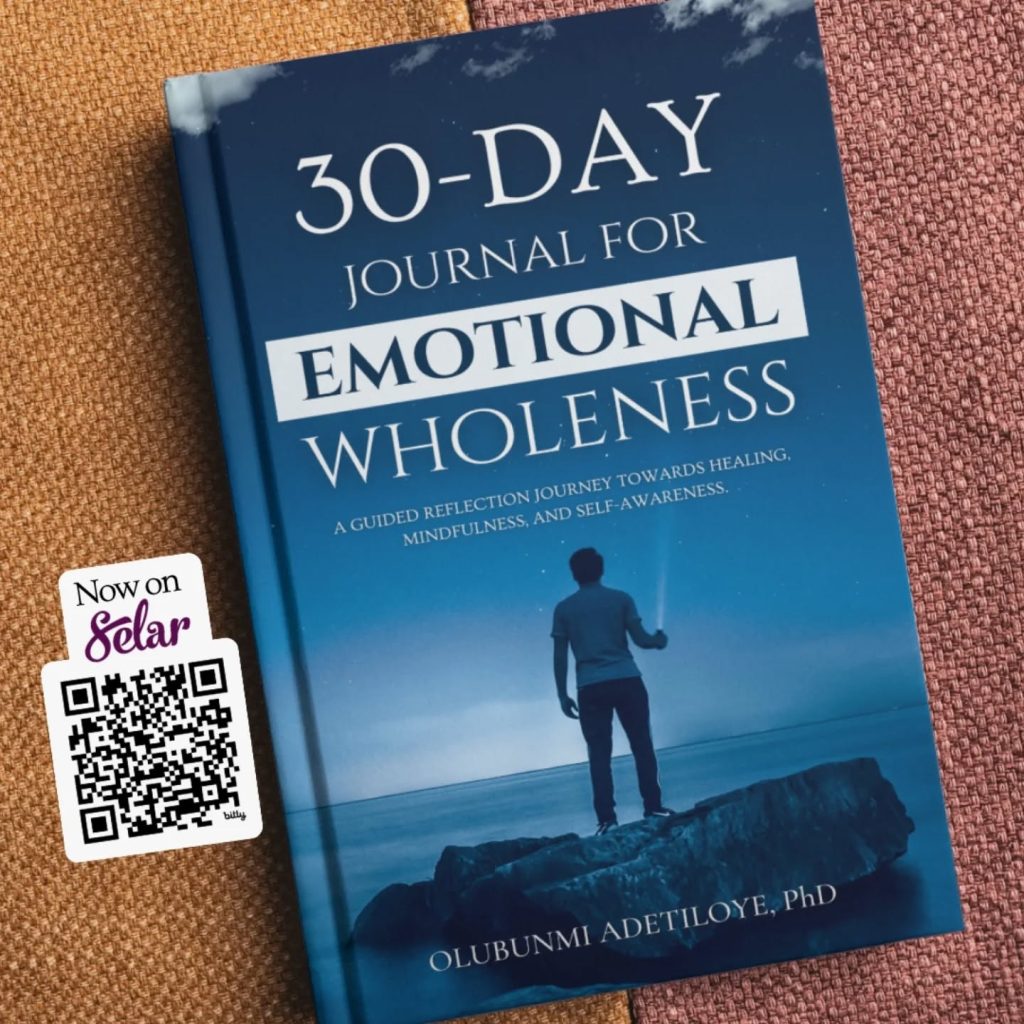
The 30-Day Journal for Emotional Wholeness by Olubunmi Adetiloye, PhD, is a guided reflection journal focused on healing, mindfulness and self-awareness. It offers a starting point for people who want to make more room for reflection in their daily lives. You can get your copy through Selar.
Click here to get your copy of the 30-Day Journal for Emotional Wholeness.
You may be the person who keeps showing up for everyone else. You meet deadlines, respond to messages, care for your family and manage responsibilities. Yet when someone asks how you feel, your answer is often, “I’m fine.”
Sometimes that answer is true. Sometimes you have simply not had the time or space to check.
A journaling habit gives you an opportunity to pause, notice what is happening within you and put words to experiences that might otherwise remain unexamined.
 30 day Journal for emotional Wholeness
What Is the 30-Day Journal for Emotional Wholeness?
The journal is written by Olubunmi Adetiloye, PhD, who leads LightHouse Counselling Hub and holds a PhD in Guidance and Counselling.
Its cover describes it as “A guided reflection journey towards healing, mindfulness, and self-awareness.”
That focus invites you to approach writing as an opportunity to understand yourself, rather than another task to perform perfectly.
| Product detail |
Information |
| Title |
30-Day Journal for Emotional Wholeness |
| Author |
Olubunmi Adetiloye, PhD |
| Stated focus |
Guided reflection, healing, mindfulness and self-awareness |
| Where to get a copy |
Selar product page |
| Price, format and delivery details |
Check the current listing before purchase |
What Does Emotional Wholeness Mean?
For this article, emotional wholeness means making space to recognise your feelings, understand your needs and respond to yourself with greater care.
It does not mean feeling happy all the time, never becoming upset or resolving every difficult experience. You can be growing while still feeling grief, uncertainty or frustration.
Reflection can begin with simple questions:
- What am I feeling?
- What has been affecting me?
- What do I need to pay attention to?
- What support would be helpful?
The journal’s 30-day framing can serve as a period of intentional practice. It is not a deadline for healing.
Why Consider Journaling for Emotional Wellbeing?
Putting an experience into words can give you something concrete to reflect on. Rather than carrying an indistinct feeling that “everything is too much,” you might begin to identify the separate pressures involved.
The U.S. Department of Veterans Affairs describes potential benefits of reflective writing, including gaining insight, clarifying goals and exploring different perspectives. These are general observations about journaling, rather than evidence that this particular journal treats a mental health condition. Whole Health Library
A reflective writing practice may give you opportunities to:
Name your emotions.
You might notice whether “stressed” means worried, disappointed, lonely or exhausted. Naming the feeling can give you a clearer starting point for understanding your experience.
Observe recurring situations.
Looking back at your writing may help you notice which situations repeatedly leave you feeling overwhelmed or supported.
Recognise your needs.
Reflection can create space to consider whether you need rest, assistance, a conversation or a boundary.
Notice supportive experiences.
Your journal can include moments of connection, relief and progress alongside difficult experiences.
You do not need to turn every difficult feeling into a positive lesson. An honest sentence can be a useful place to start.
 30 day Journal for emotional Wholeness
Who Might Be Interested in This Journal?
The 30-Day Journal for Emotional Wholeness may appeal to people who want a more intentional reflection practice.
You might be interested if you are navigating change, often struggle to put feelings into words, want to reconnect with your own needs or are curious about guided journaling.
You do not need to consider yourself a writer. Your entries can be brief, imperfect and private. The purpose of personal reflection is to explore your experience, rather than produce polished writing.
If you already attend counselling, ask your counsellor whether journaling would fit your current goals. You can decide together whether there are reflections you would like to discuss.
Explore the journal and get your copy on Selar.
How to Build a Manageable Journaling Routine
The following suggestions are general guidance for using a reflection journal.
Start with a small amount of time
Try five to ten minutes when you have some privacy. This is a suggested starting point, rather than a required session length.
Choose a time that fits your routine. You do not have to write early in the morning or late at night simply because someone else does.
Write honestly and simply
You could begin with:
“Today I noticed…”
Or:
“The feeling I have found hardest to name is…”
You do not need to explain everything at once. A few clear sentences may be enough.
Stay within what feels manageable
You do not have to describe traumatic experiences in detail to practise reflection. You can focus on present feelings, current needs and sources of support.
If writing makes you increasingly distressed, pause. Reconnect with your surroundings and consider speaking with a qualified mental health professional. Journaling is not equally helpful for everyone in every situation.
Finish with one gentle next step
After reflecting, ask what would support you today. The answer might be taking a break, asking for help or allowing yourself to postpone a non-urgent task.
Keep the step realistic. You do not need to solve every concern raised in one entry.
Return without judging yourself
Missing a day does not mean you have failed. Resume when you can.
The value of a reflective practice is not determined by a perfect streak.
Five Reflection Questions to Get You Started
These are original examples for this article, rather than quotations from the journal:
- What emotion have I noticed most today?
- What happened before I began feeling that way?
- What do I need that I have not expressed?
- What helped me feel supported or settled?
- What is one kind, realistic action I can take next?
Store your writing somewhere private, particularly if you share your home or devices with others. You do not have to share journal entries unless you choose to.
How to Get Your Copy
Getting started is straightforward:
- Open the 30-Day Journal for Emotional Wholeness product page.
- Review the current price, product format and access or delivery information.
- Complete the purchase using the options displayed.
- Follow the seller’s instructions for accessing your copy.
Click here to get your copy on Selar.
Frequently Asked Questions
Who wrote the 30-Day Journal for Emotional Wholeness?
The author shown on the cover is Olubunmi Adetiloye, PhD.
Where can I buy the journal?
You can get your copy through the journal’s Selar product page.
How much does it cost?
Check the Selar listing for the current price and purchase terms.
Is it a printed journal or a digital download?
Confirm the format and delivery or access instructions on the product page before purchasing.
Do I need previous journaling experience?
You do not need prior experience to start reflective writing. Begin with brief entries and follow the guidance provided with your copy.
Must I complete it in 30 consecutive days?
The title provides a 30-day framework. Follow the journal’s instructions and allow yourself flexibility if you need a break.
Does journaling replace therapy?
No. A journal is a self-reflection resource, rather than a substitute for assessment or treatment when these are needed. You can discuss its use with your counsellor.
Will I be emotionally healed after 30 days?
No journal can guarantee that outcome. Emotional wellbeing is affected by many factors, and meaningful change may take longer or require additional support.
Make Room for Your Own Voice
You do not need to wait until life becomes quiet before paying attention to how you feel. A short period of reflection can be a way to begin listening to yourself more carefully.
 Mental Health Counselling in Ikeja, Lagos In-Person or Online Sessions with Dr. Olubunmi Adetiloye
The 30-Day Journal for Emotional Wholeness by Olubunmi Adetiloye, PhD, invites you into a practice centred on reflection, mindfulness and self-awareness.
Start with where you are. Write what you can. Return at a pace that works for you.
Get your copy of the 30-Day Journal for Emotional Wholeness on Selar.
Related