 Why Free Business Plan Templates Often Fail to Secure Capital
Introduction
A Free Business Plan Templates Often Fail to Secure Capital, and the reason is simple. Free business plan templates can seem like the perfect shortcut when you need a business plan quickly. You download a template, fill in your business name, add your products and prices, insert some financial figures, and you are ready to apply for funding. But there is one major problem: completing a template is not the same as creating a business plan that can secure capital.
Imagine a fashion entrepreneur who wants to raise ₦20 million to expand her clothing business. She downloads a free business plan template and fills in sections about her business, target customers, products, marketing strategy, and financial projections. The document may look professional, but an investor or lender may still ask: Are these numbers realistic? Is there enough demand? Why should I fund this business? What makes it different from other fashion businesses? How will my money generate a return?
This is where many entrepreneurs get stuck.
The problem is not that a free business plan template is completely useless. A good template can provide a helpful structure and show you the information a business plan should contain. The problem begins when entrepreneurs treat the template as the finished product rather than a starting point.
In this article, we will examine why free business plan templates often fail to secure capital, the common weaknesses investors and lenders notice, and how to turn a basic template into a more credible, investor-ready business plan.
What Free Business Plan Templates Actually Do
A free business plan template is a framework that guides you through the major sections of a business plan. It can help you organise information about your business, target market, products or services, marketing strategy, operations, and financial projections.
For a first-time entrepreneur, this can be very useful. However, a template has limitations because it does not know the specific realities of your business.
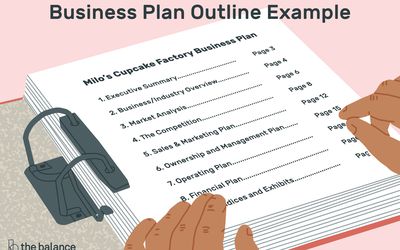 Free Business Plan Sample and Template
What a Free Business Plan Template Can Do
| Usefulness |
How It Helps |
| Provides structure |
Shows you the major sections your business plan should contain. |
| Saves time |
Gives you a starting point instead of creating the document from scratch. |
| Guides beginners |
Helps new entrepreneurs understand what information to consider. |
| Organises information |
Provides a logical way to present your business idea and plans. |
| Highlights missing areas |
Helps you notice sections you may have overlooked. |
What a Free Business Plan Template Cannot Do
| Limitation |
Why It Matters |
| Research your market |
It cannot determine whether enough customers actually exist for your product. |
| Validate your numbers |
It cannot tell you whether your revenue, costs, or profit projections are realistic. |
| Analyse your competitors |
It cannot identify what makes your business different in your specific market. |
| Build your strategy |
It cannot decide how your business should compete, grow, or respond to market challenges. |
| Justify your funding request |
It cannot determine whether asking for ₦20 million—or any other amount—is reasonable for your business. |
| Prove your business potential |
It cannot provide the customer data, sales records, contracts, or other evidence that can strengthen your case. |
For example, a fashion entrepreneur can download a template and enter “₦20 million funding required for expansion.” But the template cannot explain why ₦20 million is needed, how each naira will be spent, what additional revenue the investment could generate, or why the business is capable of repaying or delivering returns on the capital.
That is why a template should be treated as a starting point, not the finished business plan.
A professional, investor-ready business plan goes beyond filling in blanks. It connects your market research, business strategy, financial projections, and funding request into a convincing and evidence-based story.
7 Reasons Free Business Plan Templates Often Fail to Secure Capital
Downloading a template is easy. Turning it into a business plan that makes someone confident enough to provide capital is much harder.
Here are seven common reasons free business plan templates often fail to secure capital:
-
They Are Too Generic
Most free templates are designed to work for almost any type of business. As a result, they may contain broad statements that do not reflect the realities of your industry or market.
An investor wants to understand your specific business opportunity, not read information that could apply to hundreds of other businesses.
-
They Often Lack Proper Market Research
A template may ask you to describe your target market, but it cannot conduct the research for you.
Simply writing “women between 18 and 45 are our target customers” is not enough. You need to demonstrate that these customers exist, what they want, what they are willing to pay, and how you plan to reach them.
-
The Financial Projections May Be Unrealistic
This is one of the biggest weaknesses of template-based business plans.
For example, a fashion business might project ₦50 million in annual revenue without explaining how many outfits it must sell, its average selling price, production costs, operating expenses, and available production capacity.
Investors and lenders want to see numbers that are reasonable, explainable, and connected to the actual business model.
-
The Funding Request Is Not Properly Justified
Writing “We need ₦20 million to expand” does not explain why the business needs ₦20 million.
A stronger business plan should show exactly what the funding will be used for—for example, equipment, inventory, staff, marketing, workspace, or distribution—and how those investments are expected to contribute to business growth.
-
There Is No Clear Competitive Advantage
Many template-based plans say things like “our products are affordable and of high quality.”
But almost every business can make the same claim.
A strong business plan for investors should explain what makes the business different and why customers would choose it over existing alternatives.
-
They Do Not Show Enough Evidence
A well-formatted document does not automatically make a business credible.
Evidence such as existing sales, customer numbers, repeat purchases, supplier relationships, contracts, partnerships, testimonials, or production records can make the business opportunity more believable.
For a fashion entrepreneur, for instance, showing actual sales growth and repeat customers can be far more persuasive than simply stating that “the business has great potential.”
-
They Focus on Filling Sections Instead of Building a Business Case
Perhaps the biggest problem is treating the template as a questionnaire: answer every heading, add some figures, format the document, and submit it.
Capital providers are not simply looking for a completed business plan template. They want to understand whether the business is viable, whether the entrepreneur understands the market, whether the numbers make sense, and whether the proposed use of capital is justified.
A template can provide the structure. Your research, strategy, evidence, and financial analysis must provide the substance.
Free Template vs. Investor-Ready Business Plan
The difference is not simply about how attractive the document looks. It is about the quality of thinking, evidence, strategy, and financial information behind the document.
| Area |
Free Business Plan Template |
Investor-Ready Business Plan |
| Structure |
Provides standard headings and sections |
Uses a structure tailored to the specific business and funding purpose |
| Market research |
Usually provides questions or prompts |
Contains relevant market research, customer insights, and supporting evidence |
| Financial projections |
May contain basic examples or empty tables |
Uses realistic, business-specific revenue, cost, profit, and cash-flow projections |
| Funding request |
Often states an amount without much explanation |
Clearly explains how much is needed, why it is needed, and how it will be used |
| Competition |
May simply ask you to identify competitors |
Explains the competitive landscape and the business’s advantage |
| Business strategy |
Gives you a place to describe your plans |
Shows a clear strategy for attracting customers, generating revenue, and growing |
| Evidence |
Depends entirely on what the entrepreneur enters |
Uses relevant evidence such as sales records, customer data, contracts, partnerships, or validated demand |
| Investor focus |
Designed mainly to help you complete a business plan |
Designed to help a funder understand and evaluate the business opportunity |
| Credibility |
Can look professional even when the content is weak |
Combines professional presentation with credible research and realistic numbers |
How to Use a Free Template the Right Way
- Start With the Template, But Do Your Own Research
Use the headings to identify the information you need, then research your actual market, customers, competitors, suppliers, and industry.
- Replace Generic Statements With Specific Information
Do not copy statements such as “there is a high demand for our products.” Explain who your customers are, what they need, what they currently pay, and what evidence supports your claim.
- Build Your Financials From Your Actual Business
Your projections should come from your pricing, expected sales volume, production capacity, operating costs, and realistic growth assumptions—not figures copied from another business plan.
- Connect the Funding Request to Specific Needs
If your fashion business needs ₦20 million, show exactly what the money will purchase and how those investments will help increase capacity, revenue, efficiency, or market reach.
- Review the Entire Plan as an Investor Would
After completing the template, ask yourself:
“If I were putting my money into this business, would the information here give me enough confidence to consider the opportunity?”
If the answer is no, the plan needs more work.
A free template can save you time and provide direction. But the research, strategy, evidence, and financial analysis must come from your actual business. That is what transforms a downloaded template into an investor-ready business plan.
 Why Free Business Plan Templates Often Fail to Secure Capital
How to Use a Free Template the Right Way
- Start With the Template, But Do Your Own Research
Use the headings to identify the information you need, then research your actual market, customers, competitors, suppliers, and industry.
- Replace Generic Statements With Specific Information
Do not copy statements such as “there is a high demand for our products.” Explain who your customers are, what they need, what they currently pay, and what evidence supports your claim.
- Build Your Financials From Your Actual Business
Your projections should come from your pricing, expected sales volume, production capacity, operating costs, and realistic growth assumptions—not figures copied from another business plan.
- Connect the Funding Request to Specific Needs
If your fashion business needs ₦20 million, show exactly what the money will purchase and how those investments will help increase capacity, revenue, efficiency, or market reach.
- Review the Entire Plan as an Investor Would
After completing the template, ask yourself:
“If I were putting my money into this business, would the information here give me enough confidence to consider the opportunity?”
If the answer is no, the plan needs more work.
How DABH Can Help
A good business plan requires more than filling in a template. At Dayo Adetiloye Business Hub (DABH), we help entrepreneurs turn their business ideas and information into professional, evidence-based, investor-ready business plans.
Our services include:
- Business Plan Development
- Financial Projections and Cash-Flow Forecasts
- Feasibility Studies
- Pitch Deck Development
- Funding and Grant Application Support
Whether you are preparing to approach an investor, apply for a loan, or pursue a grant, DABH can help you present your business with greater clarity, credibility, and confidence.
 Why Free Business Plan Templates Often Fail to Secure Capital
Get Grant-Ready Before the Next Opportunity
Many organisations miss funding opportunities because they are not prepared when calls for applications open.
That’s why we created:
The Ultimate Grant Readiness System™
The Complete Toolkit for Grants, Funding & Investment Readiness
The toolkit includes:
- Grant Proposal Templates
- Business Plan Templates
- Financial Projection Models
- Investor Pitch Deck Templates
- Due Diligence Checklists
- NGO Proposal Templates
- Funding Readiness Resources
- Proposal Writing Guides
Whether you’re applying for international grants, innovation competitions, accelerator programmes, or investor funding, this toolkit will help you prepare professional applications with confidence.
Get instant access here:
http://selar.com/38k7agny27?affiliate=kjj9
Related