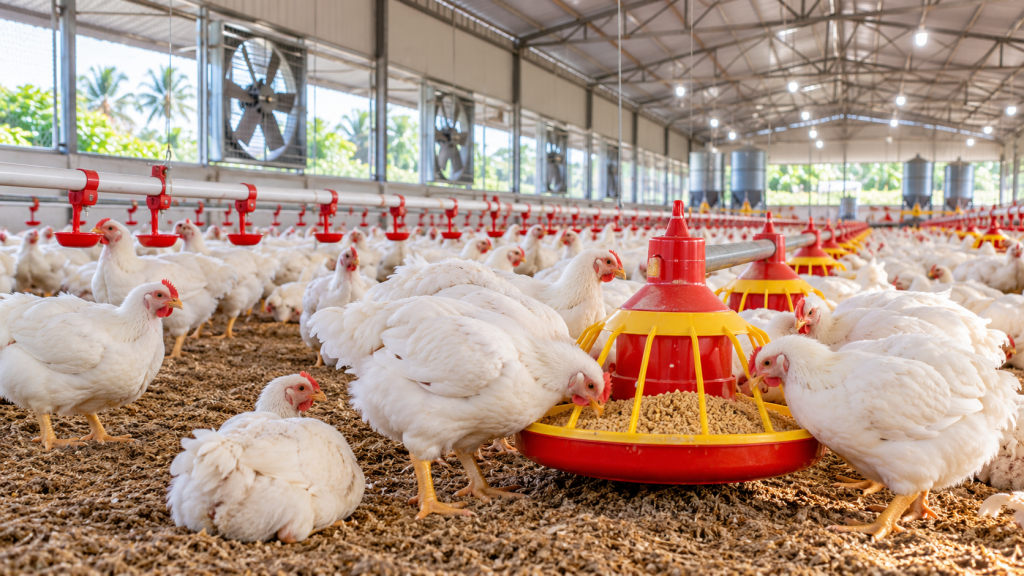
 Cost of Starting a Commercial Poultry Farm in Nigeria (2026 Guide)
Starting a commercial poultry farm in Nigeria can be a profitable agribusiness opportunity, but success depends on accurate financial planning, efficient production and reliable access to buyers.
With rising poultry feed prices, infrastructure costs and fluctuating market conditions, understanding the cost of starting a commercial poultry farm in Nigeria in 2026 is essential before investing.
Whether you plan to raise 500 broilers, establish a 1,000-bird farm or invest in commercial egg production, this guide explains the startup costs, profitability, risks and funding options you should consider.
How Much Does It Cost to Start a Commercial Poultry Farm in Nigeria in 2026?
Starting a 500-broiler commercial poultry farm in Nigeria may require approximately ₦5 million to ₦7 million, including basic housing, equipment and first-cycle operating expenses.
A 1,000-broiler farm could require ₦9 million to ₦13 million, depending on the location, production system and infrastructure.
These are indicative investment estimates, not guaranteed market prices. Costs may be lower if suitable housing already exists or substantially higher if land acquisition and extensive construction are required.
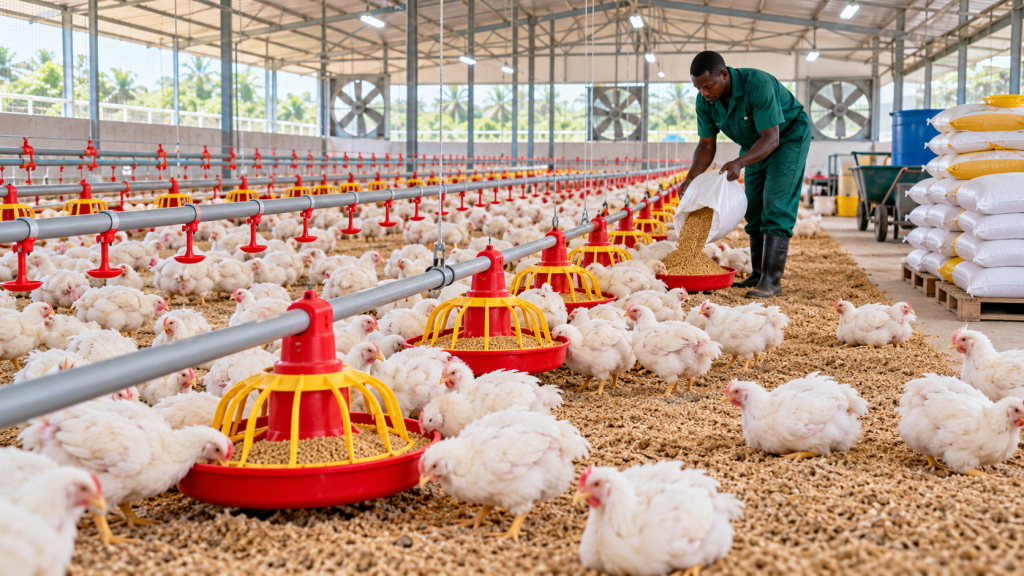
The major expenses include poultry housing, day-old chicks, feed, equipment, veterinary services, labour, electricity and water.
What Determines the Cost of Starting a Poultry Farm?
Three major factors determine the capital required.
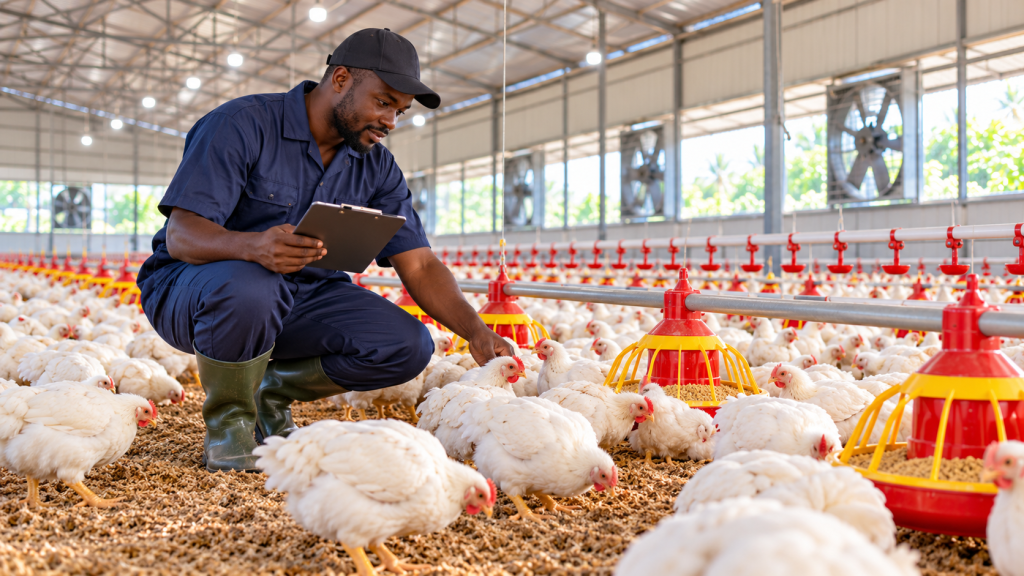
1. Type of poultry farming: Broilers are raised primarily for meat and generally reach market weight within six to eight weeks. Layers are raised for egg production and require a longer investment period before regular revenue begins.
2. Production capacity: A farm with 1,000 birds requires more capital than one with 500 birds, although larger farms may achieve some economies of scale.
3. Production system: Deep-litter systems generally require less initial equipment investment than more automated commercial housing systems.
Feed is particularly important. According to the Food and Agriculture Organization (FAO), feeding represents a major cost in intensive poultry production. Consequently, changes in feed prices can significantly affect profitability.
 Cost of Starting a Commercial Poultry Farm in Nigeria (2026 Guide)
What Are the Prices of Poultry Inputs in Nigeria in 2026?
Recent market information provides useful benchmarks for prospective investors.
According to FarmPaddy’s Nigerian livestock and poultry market dashboard dated October 20, 2026:
| Poultry Input |
Indicative Market Price |
| Day-old broiler chicks |
₦180,000 per 100 chicks |
| Day-old layer chicks |
₦250,000 per 100 chicks |
| Broiler finisher feed |
₦21,500 per 25kg bag |
| Large broiler chicken |
₦15,000 per bird |
| Large eggs |
₦6,400 per crate of 30 |
Source: FarmPaddy Market Dashboard, October 20, 2026.
These are modelled market reference prices, not uniform nationwide selling prices. Actual costs vary across states, suppliers, breeds and order quantities.
Entrepreneurs should obtain current quotations before purchasing chicks or feed.
Detailed Cost of Starting a 500-Broiler Poultry Farm in Nigeria
The following budget illustrates the financial requirements for establishing a 500-broiler farm using a modest deep-litter housing system.
Estimated Startup Capital for 500 Broilers
| Expense |
Estimated Cost (₦) |
| Poultry housing and renovation |
1,200,000 |
| Feeders, drinkers and brooding equipment |
300,000 |
| 500 day-old chicks at ₦2,000 |
1,000,000 |
| 100 bags of feed at ₦22,000 |
2,200,000 |
| Vaccination, veterinary care and litter |
180,000 |
| Labour, electricity, water and transportation |
300,000 |
| Contingency allowance |
450,000 |
| Total Estimated Investment |
₦5,630,000 |
Under these assumptions, an investor would require approximately ₦5.63 million to establish and operate the first production cycle.
The budget excludes land acquisition and financing costs. It assumes 100 bags of 25kg feed, equivalent to 5kg per chick initially stocked. Actual consumption will depend on breed, target weight, mortality and feed management.
Importantly, housing and equipment represent capital expenditure, while feed, chicks and veterinary services are recurring expenses.
An entrepreneur with existing poultry infrastructure may therefore require considerably less capital for subsequent production cycles.
How Much Does It Cost to Start a 1,000-Broiler Poultry Farm?
A 1,000-broiler operation may require approximately ₦9 million to ₦13 million, excluding land acquisition.
At illustrative prices of ₦2,000 per chick and ₦22,000 per 25kg feed bag, purchasing 1,000 chicks and 200 bags of feed would cost approximately ₦6.4 million.
Additional capital would be needed for housing, equipment, veterinary services, utilities, labour and contingency.
Before increasing production capacity, investors should confirm adequate working capital, reliable feed supply and sufficient market demand.
Is Commercial Broiler Farming Profitable in Nigeria?
Commercial broiler farming can be profitable, but actual returns depend on production costs, mortality and selling prices.
Consider a hypothetical farm starting with 500 broilers.
Assume a mortality rate of 5%, leaving 475 birds available for sale.
If each mature broiler sells for ₦13,000:
Total Revenue = 475 × ₦13,000 = ₦6,175,000
Illustrative Profitability Analysis
| Financial Indicator |
Amount (₦) |
| Revenue from 475 broilers |
6,175,000 |
| Day-old chicks |
1,000,000 |
| Poultry feed |
2,200,000 |
| Veterinary care and litter |
180,000 |
| Labour, utilities and transportation |
300,000 |
| Total Recurring Expenses |
3,680,000 |
| Operating Contribution |
2,495,000 |
The estimated operating contribution is ₦2.495 million before deducting depreciation, rent, financing costs, taxes and other unallocated expenses.
It should not be interpreted as guaranteed net profit.
At ₦10,000 per bird, revenue would decline to ₦4.75 million, reducing operating contribution to ₦1.07 million.
The simplified operating break-even selling price is approximately ₦7,747 per surviving bird, excluding fixed-asset recovery and other unallocated costs.
This demonstrates why every poultry investor needs realistic financial projections rather than relying on attractive revenue figures.
What Is the Cost of Starting a Commercial Layer Farm?
Layer farming requires a different financial approach because birds must be maintained until they begin producing eggs.
Startup expenses include housing, day-old pullets or point-of-lay birds, feeding equipment, vaccination, labour and feed throughout the growing period.
A properly prepared 500-layer feasibility study should consider:
- Cost of raising birds to egg-production age.
- Monthly feed consumption and egg production.
- Egg selling prices, mortality and breakage.
- Labour, veterinary care and replacement costs.
Layers can generate recurring revenue after production begins, but investors need sufficient working capital to cover the initial rearing period.
What Are the Major Risks of Poultry Farming in Nigeria?
Poultry farming involves biological, financial and market risks.
Disease outbreaks: Poor biosecurity, inadequate veterinary supervision and disease outbreaks can lead to significant losses. Farmers should establish vaccination schedules and biosecurity procedures with qualified veterinarians.
Rising feed costs: Since feed represents a substantial recurring expense, unexpected price increases can reduce profit margins.
Market fluctuations: Selling prices may vary according to season, location, bird size and demand.
Poor financial management: Farmers sometimes underestimate working capital, mix personal spending with farm finances or expand without sufficient cash reserves.
These risks can be reduced through proper feasibility studies, accurate farm records, veterinary support, diversified customers and contingency planning.
 Cost of Starting a Commercial Poultry Farm in Nigeria (2026 Guide)
How Can You Finance a Commercial Poultry Farm in Nigeria?
Entrepreneurs can explore personal savings, cooperative financing, business partnerships, bank loans and eligible agricultural development-finance programmes.
The Bank of Industry (BOI) provides financing facilities for qualifying businesses. On October 2, 2026, BOI launched its MyBOI digital portal to simplify access to financing applications and related services.
Applicants should confirm current eligibility requirements and financing terms directly through BOI’s official website.
A credible poultry farm funding application typically requires a business plan, feasibility study, financial projections, market evidence and reliable supplier quotations.
For entrepreneurs preparing grant applications and funding documentation, The Ultimate Grant Readiness System™ provides practical tools and resources for improving funding readiness.
Access The Ultimate Grant Readiness System™
The toolkit supports preparation but does not guarantee funding approval.
 Cost of Starting a Commercial Poultry Farm in Nigeria (2026 Guide)
How Can Dayo Adetiloye Business Hub Help You Start a Poultry Farm?
Establishing a sustainable commercial poultry farm requires sound financial projections, reliable market research and a commercially viable operating strategy.
Dayo Adetiloye Business Hub supports Nigerian entrepreneurs, agribusiness investors and SMEs with professional business development services.
Our services include poultry farm business plans, feasibility studies, financial projections, market research, BOI loan application support, grant writing, pitch decks, funding readiness and investment advisory.
Whether you are starting with 500 birds or planning a larger commercial operation, we can help you evaluate the financial viability of your proposed investment and prepare the documentation needed to approach lenders and investors.
Contact Dayo Adetiloye Business Hub
Call/WhatsApp: 08105636015, 08076359735, 08113205312
Email: dayohub@gmail.com
Website: www.dayoadetiloye.com
Frequently Asked Questions About Poultry Farming in Nigeria
How Much Capital Do I Need to Start Poultry Farming in Nigeria?
A 500-broiler commercial farm may require approximately ₦5 million to ₦7 million when basic housing and first-cycle operating expenses are included. Actual costs depend on location and infrastructure.
Is Broiler Farming More Profitable Than Layer Farming?
Neither is automatically more profitable. Broilers offer shorter production cycles, while layers generate recurring egg sales. Profitability depends on operating efficiency, prices and market access.
What Is the Biggest Expense in Commercial Poultry Farming?
Feed is typically the largest recurring production expense. Farmers should monitor feed prices, consumption and feed conversion efficiency closely.
How Long Does It Take to Raise Commercial Broilers?
Commercial broilers commonly reach market readiness within six to eight weeks, depending on breed, feeding, management and target weight.
Conclusion
The cost of starting a commercial poultry farm in Nigeria in 2026 depends on production capacity, infrastructure, input prices and management efficiency.
A 500-broiler farm may require approximately ₦5.63 million under the illustrative budget presented, while larger operations demand greater investment.
However, successful poultry farming is not simply about raising more birds; it is about controlling production costs, reducing losses and selling profitably.
Before investing, obtain updated supplier quotations, conduct market research and develop realistic financial projections.
For professional poultry farming business plans, feasibility studies and funding preparation, contact Dayo Adetiloye Business Hub to make informed investment decisions.
Related